12 Best Ecommerce CMS Platforms for 2025 (Reviewed)
Discover the best ecommerce CMS for your business. We review the top 12 platforms with pros, cons, pricing, and real use cases to help you choose wisely.

The foundation of any successful online business is its ecommerce platform. Choosing the best ecommerce CMS isn't just about listing products; it's about managing inventory, processing payments, marketing, and creating seamless customer experiences. The right system acts as the central nervous system for your entire operation, while the wrong one can lead to lost sales, security vulnerabilities, and significant scaling challenges. When choosing an e-commerce CMS, evaluating its support for effective e-commerce logistics is vital for efficient order fulfillment and customer satisfaction.
This guide moves beyond generic feature lists to provide a detailed, analytical breakdown of the top 12 platforms. We cut through the marketing hype to examine each solution's ideal use case, practical limitations, implementation hurdles, and true cost of ownership. Our analysis will give you the critical insights needed to make a strategic decision that aligns with your specific business goals, technical skill level, and budget. Whether you're a startup launching your first product, a content-driven brand integrating commerce, or a complex enterprise with unique requirements, this resource will help you navigate the crowded market. Each entry includes detailed analysis, screenshots, and direct links to help you find the perfect engine for your online store.
1. Shopify
Shopify has established itself as a leading all-in-one hosted solution, making it one of the best ecommerce CMS platforms for businesses aiming for rapid launch and reliable performance. It bundles hosting, security, and a powerful content management system into a single subscription, eliminating much of the technical overhead associated with self-hosted platforms. Its architecture is optimized for speed and conversion, particularly its famously streamlined checkout process.
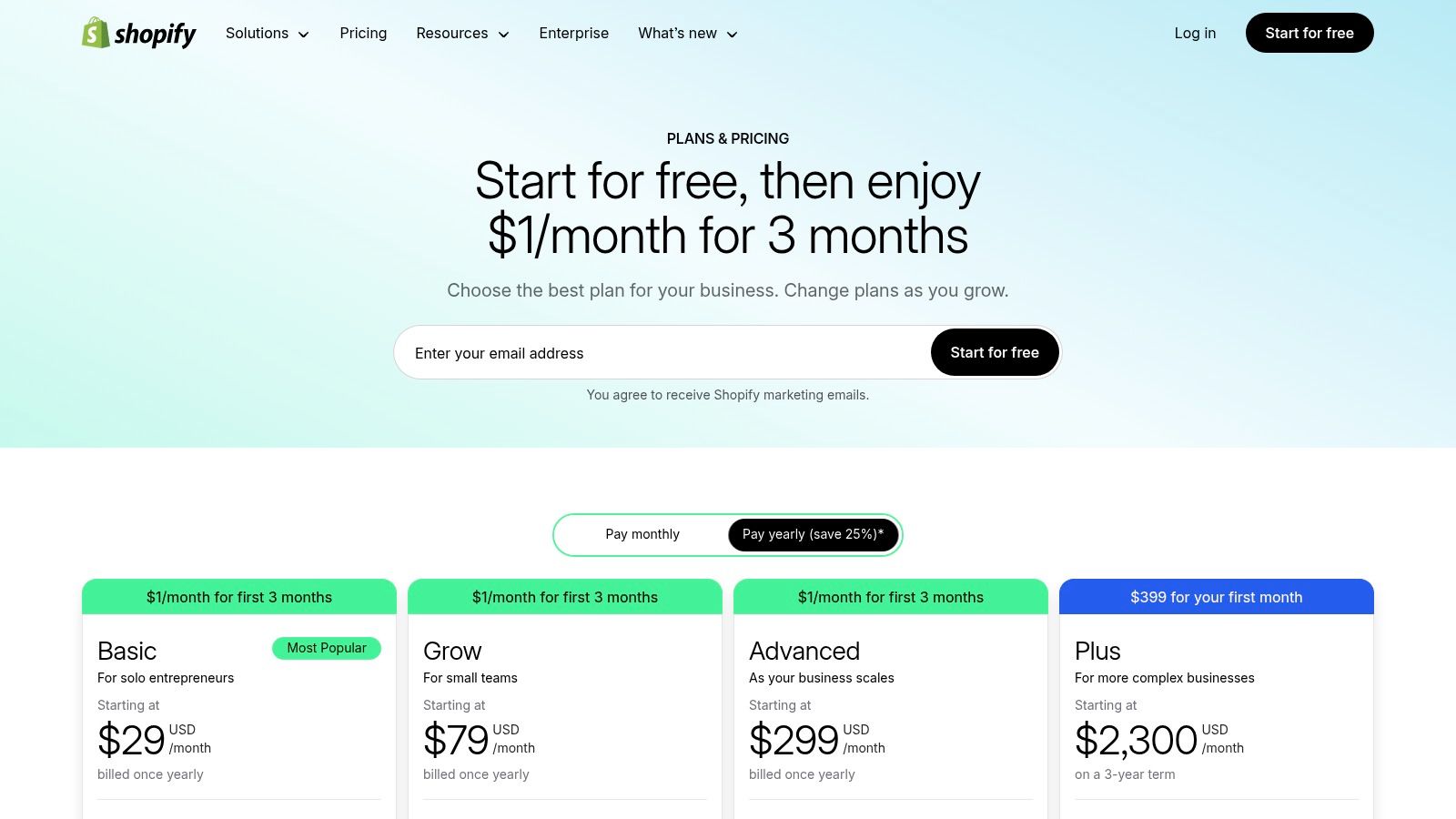
The platform scales seamlessly from small startups to large enterprises with Shopify Plus, providing a consistent growth path. This scalability, combined with a vast app ecosystem for extending functionality, is its core strength. For Shopify merchants looking to expand their payment options, you can also explore how to integrate cryptocurrency payments into your Shopify store.
Key Features & Considerations
- Integrated Payments: Shopify Payments offers competitive rates and simplifies transactions, though using external gateways incurs an additional fee.
- Multichannel Selling: Easily sync products and sell across social media platforms like Instagram and TikTok, as well as major online marketplaces.
- App Ecosystem: A major advantage is the access to thousands of apps for marketing, SEO, inventory management, and more, though costs can add up.
- Support: 24/7 customer support via chat, phone, and email provides a reliable safety net for merchants of all sizes.
While highly intuitive, the reliance on apps for advanced features and the transaction fees for third-party payment gateways are important cost factors to consider. Discover additional insights and comparisons in our complete e-commerce CMS collection.
2. WooCommerce
WooCommerce transforms the world's most popular content management system, WordPress, into a powerful, open-source ecommerce engine. As a plugin, it excels for businesses where content and SEO are the primary drivers of strategy, offering unparalleled control over data, hosting, and customization. This makes it one of the best ecommerce CMS solutions for merchants who prioritize content marketing and brand ownership over an all-in-one, hosted approach.
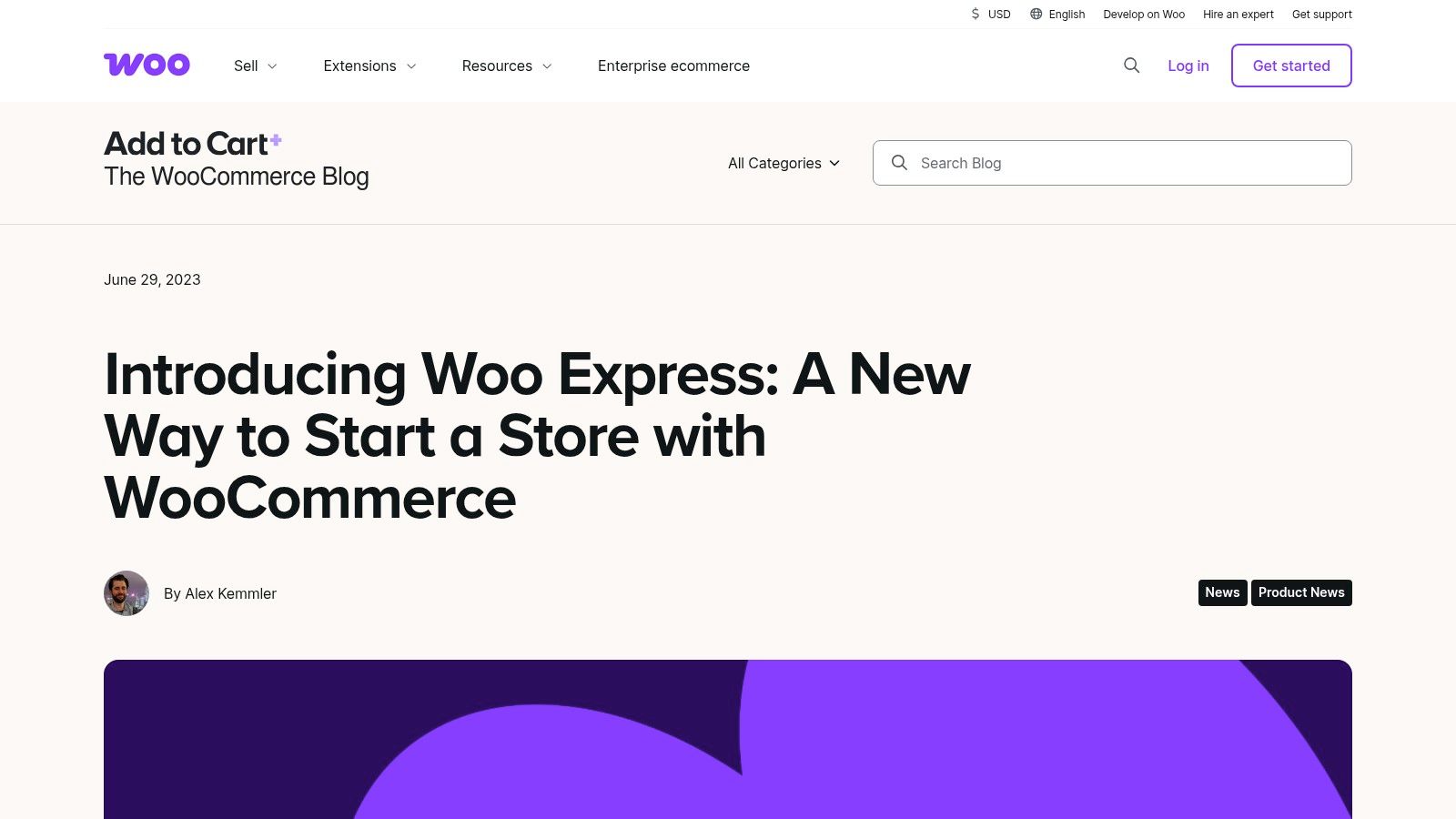
The platform's core strength lies in its deep integration with the WordPress ecosystem, allowing for seamless content and commerce experiences. While self-hosting provides ultimate freedom, options like the newly introduced Woo Express offer a managed, hosted experience for those who want the power of WooCommerce without the technical maintenance. This flexibility allows businesses to choose the path that best fits their technical resources and growth plans.
Key Features & Considerations
- Deep WordPress Integration: Leverage the full power of WordPress for blogging, landing pages, and advanced SEO, creating a content-rich shopping experience.
- Unlimited Customization: With a massive ecosystem of themes and plugins, you can build virtually any type of store for physical products, subscriptions, or bookings.
- Data Ownership: You maintain complete control over your store's data and can choose your own hosting provider, avoiding vendor lock-in.
- Extensive Marketplace: Access thousands of free and premium extensions for B2B functionality, dynamic pricing, shipping integrations, and more.
The primary trade-off is responsibility; with self-hosting, security, updates, and performance optimization fall on the user, though the quality of third-party plugins can also vary. Explore our dedicated resource page for WordPress to learn more.
3. Adobe Commerce (Magento)
Adobe Commerce, formerly known as Magento, stands as an enterprise-grade ecommerce CMS renowned for its immense power and customizability. It is built for businesses with complex operational needs, offering sophisticated tools for managing intricate product catalogs, advanced pricing rules, and multifaceted B2B workflows. The platform is available as a fully managed cloud solution from Adobe or as a self-hosted option, providing unparalleled flexibility in deployment.
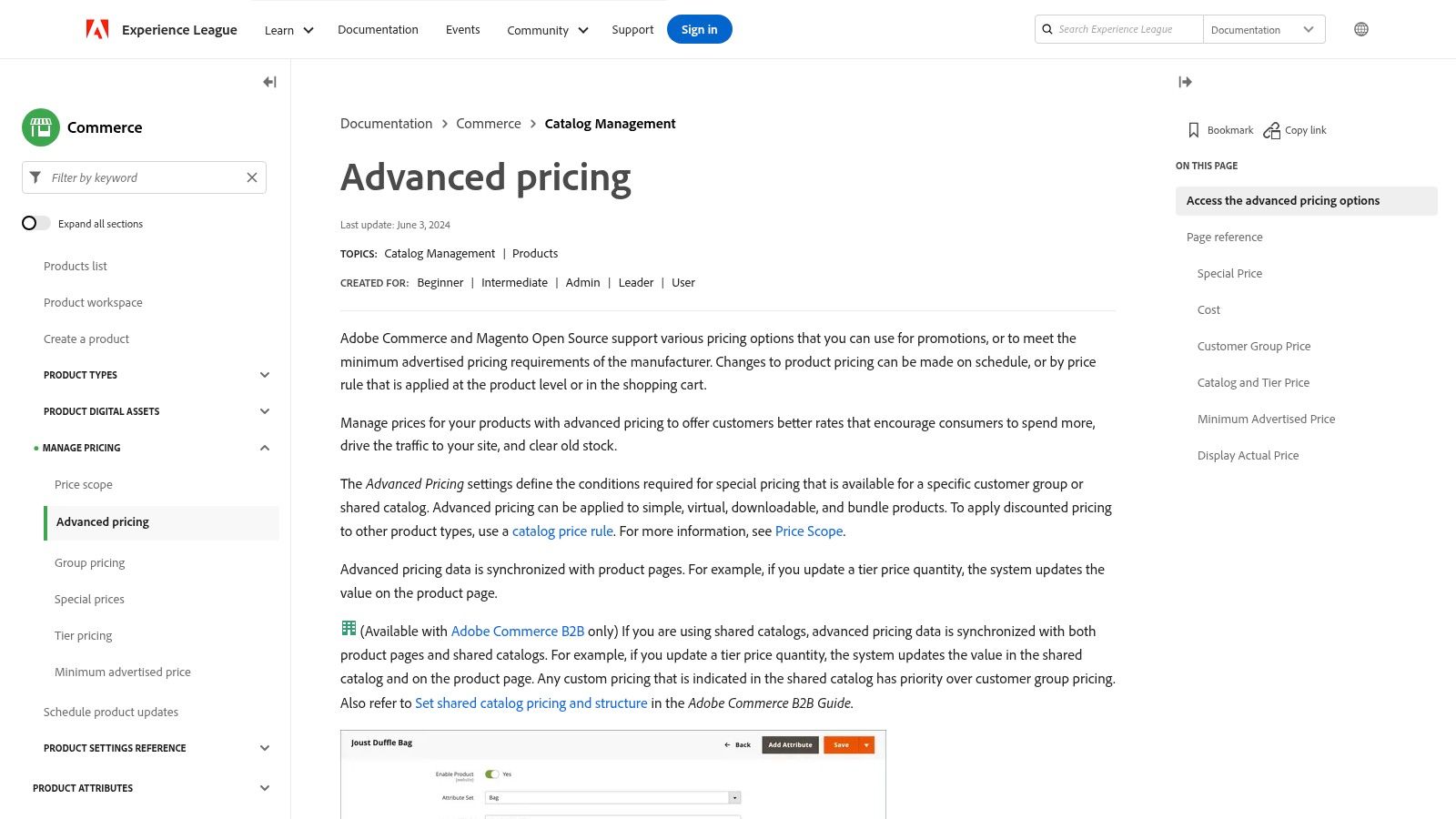
This platform truly shines in scenarios where standard solutions fall short, supporting global operations with multiple brands, currencies, and languages from a single backend. The open-source version, Magento Open Source, grants developers complete control over the codebase, making it a top choice for highly bespoke ecommerce experiences. For those considering a ground-up build, discover the possibilities of developing a custom CMS for your business.
Key Features & Considerations
- Advanced B2B & Catalog Tools: Native support for company accounts, custom catalogs, quote management, and complex pricing rules make it a B2B powerhouse.
- Flexible Deployment: Choose between the convenience of Adobe-managed cloud hosting or the total control of a self-managed, on-premise installation.
- Rich Extension Marketplace: A vast ecosystem of third-party extensions and a large global developer community allow for virtually limitless functional expansion.
- Headless Commerce Capabilities: Strong API support enables headless architectures, separating the front-end presentation layer from the back-end ecommerce engine.
While incredibly powerful, both Adobe Commerce and the open-source version require significant technical expertise and development resources for implementation and ongoing maintenance, and licensing costs can be substantial.
4. BigCommerce
BigCommerce positions itself as a powerful hosted ecommerce CMS with robust native features, making it an excellent choice for scaling B2C and B2B brands that want deep out-of-the-box commerce capabilities. Unlike platforms that rely heavily on third-party apps, BigCommerce includes a significant amount of advanced functionality built directly into its core system, reducing the need for costly add-ons. Its architecture is designed for API-driven headless commerce and complex multichannel operations.
The platform is particularly strong for businesses managing large catalogs or multiple storefronts from a single backend. This focus on native power and API flexibility makes it one of the best ecommerce cms solutions for merchants who anticipate rapid growth and want to avoid replatforming. BigCommerce also stands out by charging zero platform transaction fees on all plans, a key financial advantage over some competitors.
Key Features & Considerations
- No Platform Transaction Fees: A major benefit is that BigCommerce does not charge an additional percentage-based fee on your sales, regardless of the payment gateway you use.
- Multi-Storefront & Headless APIs: Manage multiple unique storefronts, brands, or regional sites from a single account and leverage powerful APIs for custom headless implementations.
- Built-in SEO & Analytics: Comes equipped with a comprehensive suite of SEO tools and robust analytics out of the box, helping merchants optimize for visibility and performance.
- Omnichannel Integrations: Natively sync your products to sell across social channels like Instagram and marketplaces such as Amazon and eBay.
While BigCommerce offers impressive native functionality, its theme customization can feel less flexible than some visual-first site builders. Additionally, its pricing plans are tied to annual online sales thresholds, which can trigger automatic and sometimes unexpected plan upgrades. You can view the latest pricing updates on the official BigCommerce blog.
5. Wix eCommerce
Wix has evolved from a simple website builder into a robust ecommerce CMS designed for small businesses and solo entrepreneurs who prioritize speed and design simplicity. It provides an all-in-one solution that bundles hosting, payments, and a powerful content management system, offering a fast and direct path to a polished storefront. Its drag-and-drop editor is exceptionally intuitive, making it ideal for those without technical expertise.
The platform’s strength lies in its ability to combine ease of use with comprehensive, built-in business tools. Transparent, tiered ecommerce plans and reliable performance for small to medium-sized businesses make it an accessible choice. Wix stands out as one of the best ecommerce CMS options for merchants wanting a visually impressive site without a steep learning curve or development overhead.
Key Features & Considerations
- Design Flexibility: The platform offers over 900 professionally designed templates and a highly intuitive drag-and-drop editor, supported by AI design assistants.
- Built-in Business Tools: Wix includes integrated marketing and SEO tools, multichannel selling capabilities, and native payment processing to manage operations from one dashboard.
- App Market: An extensive App Market allows for the addition of specialized features and integrations, though advanced functionality may require paid add-ons.
- Scalability Path: While excellent for SMBs, migrating a large-scale operation from Wix to a more complex, developer-centric enterprise stack can be challenging later on.
The platform provides an excellent balance of simplicity and power, though businesses anticipating highly complex, custom needs should consider its extensibility limits. For more options, explore our complete website builder CMS collection.
6. Squarespace Commerce
Squarespace Commerce has carved out a niche as the design-forward choice among the best ecommerce CMS platforms, excelling where aesthetics and content are paramount. It’s an all-in-one hosted solution that integrates its renowned website builder with robust commerce features, making it ideal for creative brands, artists, and businesses that rely on strong visual storytelling to sell products. The platform prioritizes a polished user experience from the storefront to the backend.
Unlike competitors focused purely on transaction volume, Squarespace seamlessly blends content and commerce, allowing merchants to embed shoppable products within blog posts or portfolio pages effortlessly. This integrated approach supports brands that want to build a community and narrative around their products, not just a catalog. For a deeper dive into their offerings, you can review Squarespace's plan explanations.
Key Features & Considerations
- Design and Templates: Offers award-winning, visually stunning templates and the flexible Fluid Engine editor for unparalleled design control without needing to code.
- Integrated Merchandising: Built-in tools for product quick view, related products, waitlists, and subscriptions make it easy to implement common sales tactics.
- Content and Commerce: The platform’s strength lies in its ability to fuse rich content like blogs and portfolios with a fully functional online store.
- Squarespace Extensions: While the native feature set is strong, a curated selection of third-party extensions is available for more complex needs like shipping and fulfillment.
While it excels in presentation and ease of use, Squarespace is less suited for stores with highly complex catalogs or those requiring extensive B2B functionality.
7. Webflow Ecommerce
Webflow Ecommerce carves out a unique space as a visually-driven, designer-centric platform, making it one of the best ecommerce CMS options for brands where pixel-perfect design is non-negotiable. It combines a powerful no-code visual editor with a flexible CMS, allowing teams to build highly custom, content-rich storefronts without writing code. This approach is ideal for businesses whose brand identity is as important as the products they sell.
The platform is built on modern, high-performance hosting, ensuring fast load times and a smooth user experience. Its true strength lies in enabling unmatched creative freedom, letting designers build interactions and layouts that are difficult to achieve with template-based systems. This makes it a top choice for design agencies and in-house creative teams building sophisticated online stores.
Key Features & Considerations
- Pixel-Level Design Control: Offers unparalleled visual control over every element, enabling fully custom designs without needing to hand-code.
- Integrated CMS: Webflow's powerful CMS Collections allow for the creation of rich content like blogs, lookbooks, and case studies that seamlessly integrate with products.
- Hosting & Performance: All plans include fast, managed hosting, which contributes to better SEO performance and user engagement.
- Tiered Ecommerce Plans: Plans come with specific limits on the number of items you can sell and varying transaction fees, which is a critical consideration for scaling. It's important to review their latest pricing and plan updates before committing.
While its design capabilities are top-tier, businesses with large inventories or complex ecommerce needs may find the item limits and transaction fees on lower-tier plans restrictive.
8. Ecwid by Lightspeed
Ecwid by Lightspeed presents a unique approach, positioning itself as an embeddable ecommerce solution rather than a standalone website builder. Its core strength lies in its ability to add a full-featured store to any existing website, whether it's built on WordPress, Squarespace, Wix, or a custom HTML site. This makes it an excellent choice for businesses that already have a strong online presence and want to bolt on commerce functionality without a complete platform migration.
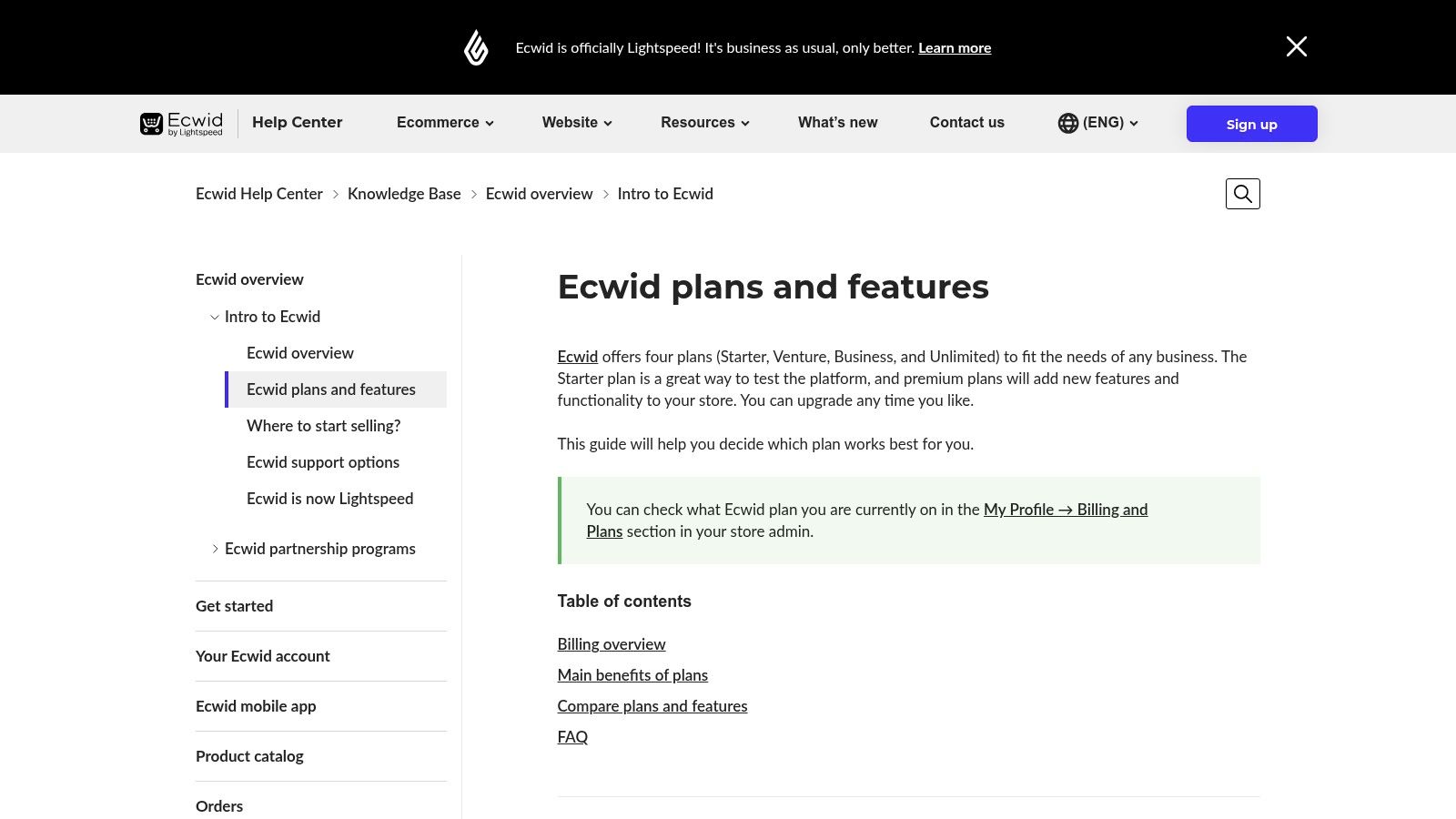
The platform is designed for simplicity and speed, allowing merchants to get a functional store live in minutes. For those without a website, Ecwid provides an "Instant Site," a simple one-page ecommerce storefront. This flexibility makes it one of the best ecommerce CMS options for users who prioritize speed and integration over deep, site-wide customization.
Key Features & Considerations
- Embeddable Widget: The primary feature is a simple code snippet that adds a store to any page on an existing site, inheriting its design seamlessly.
- Multichannel Selling: Integrates directly with social platforms like Facebook and Instagram, as well as marketplaces like Amazon and eBay, from a single dashboard.
- Instant Site: Offers a basic, free one-page website for businesses that are just starting out and need a quick, no-frills online presence.
- Cost-Effective Entry: A generous free plan allows businesses to start selling up to 5 products without initial investment, with clear, affordable upgrade paths.
While its ease of use is a major advantage, businesses requiring extensive design control or advanced features may find the platform's focus on embeddable commerce somewhat limiting compared to full-fledged solutions. For a closer look at its plans, visit the Ecwid features page.
9. Shift4Shop (formerly 3dcart)
Shift4Shop, formerly known as 3dcart, presents a compelling value proposition, especially for U.S.-based merchants. It operates as a hosted, all-in-one ecommerce CMS that packs an extensive array of built-in features, reducing the need for costly third-party apps. Its main differentiator is the free End-to-End Ecommerce plan for U.S. businesses that use its native Shift4 Payments processor, making it a powerful contender for those seeking a feature-rich platform without the subscription fees.
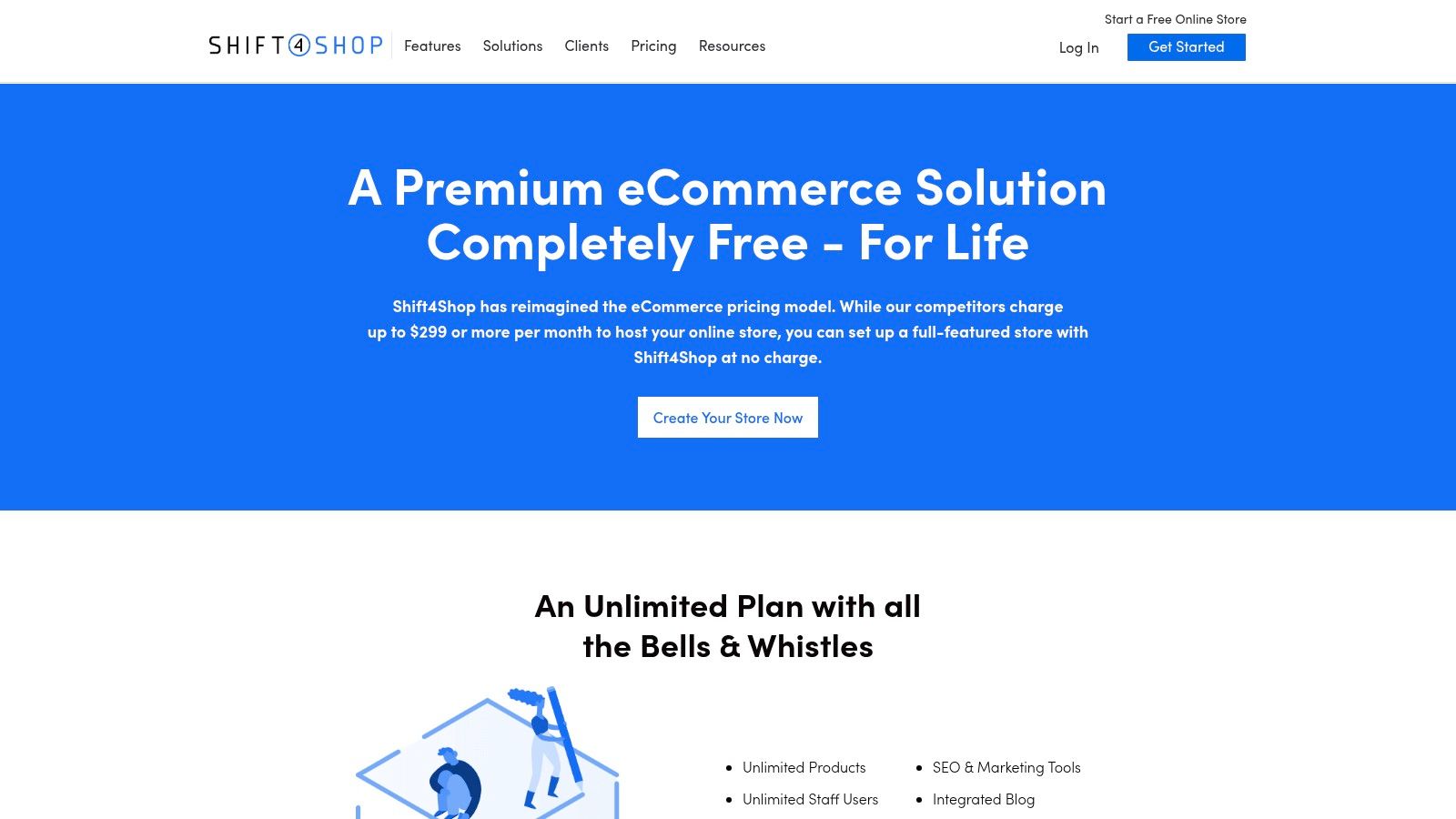
The platform is built on a solid foundation of PCI-certified hosting with a 99.99% uptime guarantee, providing a secure and reliable environment. While its template designs may not always feel as modern as some newer competitors, the depth of its out-of-the-box functionality in areas like SEO, promotions, and inventory management makes it one of the best ecommerce cms options for businesses prioritizing features over aesthetics.
Key Features & Considerations
- Free Plan for U.S. Merchants: The End-to-End plan offers a complete enterprise-grade solution at no monthly cost for U.S. businesses processing payments through Shift4.
- Comprehensive Built-in Tools: Includes advanced SEO tools, a blogging engine, CRM software, and marketing features like newsletters and affiliate program management without needing extra apps.
- Robust Core Functionality: Supports a wide range of business needs, including dropshipping, recurring orders, and product personalization directly from the core platform.
- Template Design: While functional, the selection of modern, visually striking themes is more limited compared to platforms like Shopify or BigCommerce.
For more details on its unique pricing model and feature set, visit the official Shift4Shop website.
10. PrestaShop
PrestaShop is a powerful open-source ecommerce CMS known for its flexibility and extensive customization capabilities. It offers a free, self-hosted Classic edition that gives developers full control over their store's code and infrastructure. This model is ideal for merchants with technical expertise who want to build a highly tailored online store without licensing fees, positioning it as a strong contender for the best ecommerce cms for those on a budget.
The platform particularly shines in its native support for international commerce, offering robust multi-currency and multilingual features out of the box. Its modular architecture allows functionality to be extended through a vast marketplace of both free and paid modules. While the core software is free, merchants should budget for hosting, security, and premium modules to unlock advanced capabilities. For those seeking a more managed experience, PrestaShop also provides hosted solutions.
Key Features & Considerations
- Open-Source Flexibility: The Classic edition is free to download and provides complete source code access, allowing for deep customization.
- International Commerce: Excellent built-in tools for managing multiple languages, currencies, and regional tax rules.
- Module Marketplace: Access a large ecosystem of add-ons and themes to extend store functionality, from marketing automation to payment gateways.
- Technical Requirements: Self-hosting requires significant technical knowledge for setup, maintenance, security, and performance optimization. Advanced features often rely on paid modules or custom development.
11. OpenCart
OpenCart offers a lightweight, open-source ecommerce CMS that provides a highly cost-effective and flexible foundation for online stores. As a self-hosted platform, its core software is free to download and use, giving merchants complete control over their data and infrastructure. This approach is ideal for businesses with technical expertise or those wanting to avoid monthly subscription fees associated with hosted solutions. Its straightforward admin panel makes it relatively easy for newcomers to manage products and orders.
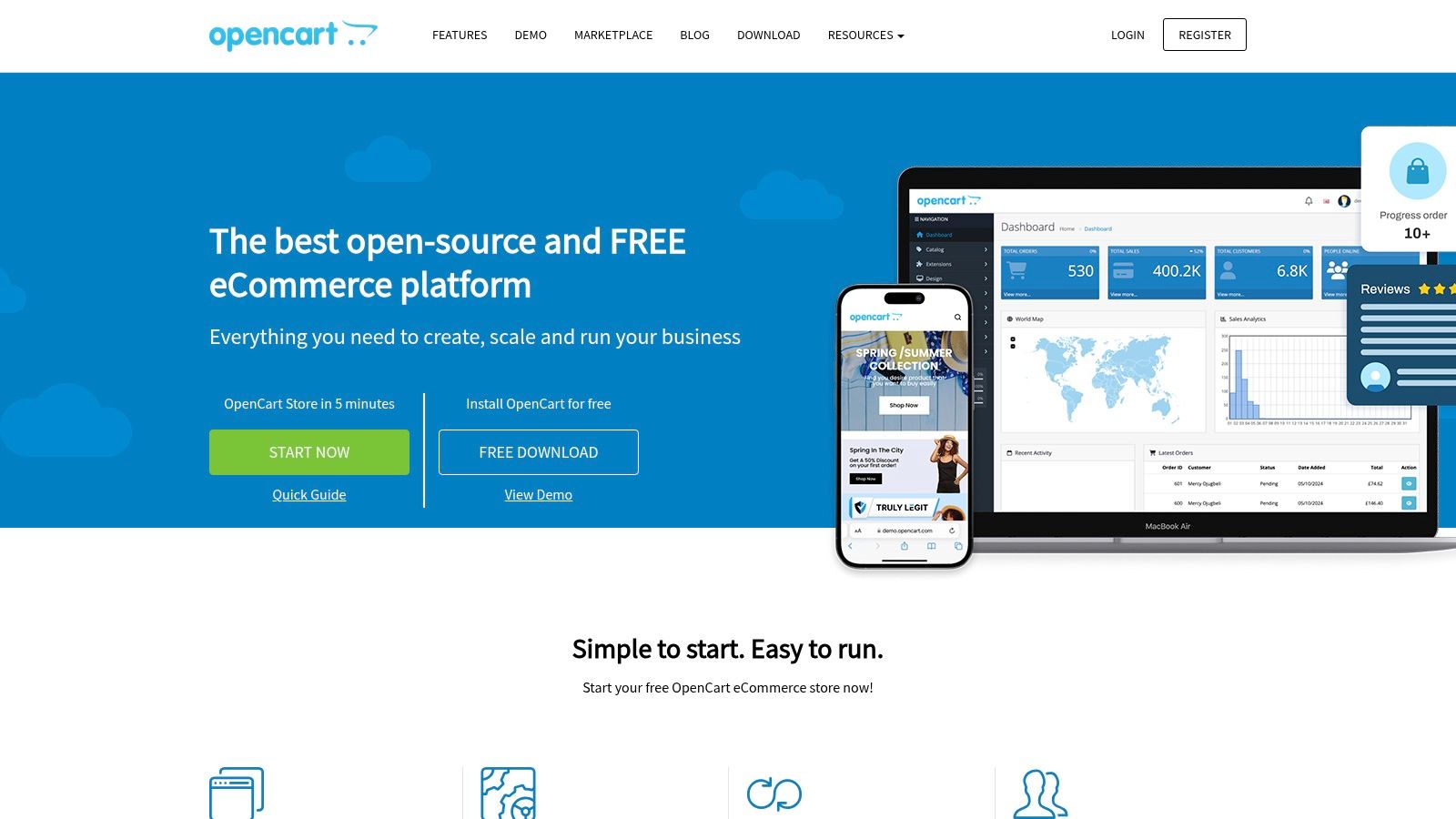
The platform's primary strength lies in its extensive marketplace, which features over 13,000 extensions and themes. This allows for significant customization, from payment gateways to marketing tools, without requiring custom development. For those who prefer a managed solution, OpenCart Cloud provides a hosted alternative, bridging the gap between open-source flexibility and SaaS convenience. It stands out as one of the best ecommerce cms options for those prioritizing ownership and extensibility.
Key Features & Considerations
- No License Fees: The core OpenCart software is completely free, with costs limited to hosting, domains, and any premium extensions or themes you choose.
- Extensive Marketplace: Tailor your store's functionality with a vast selection of add-ons, though be mindful that costs for multiple extensions can accumulate.
- Multi-Store Support: Manage multiple storefronts from a single admin interface, which is useful for businesses targeting different customer segments or regions.
- Hosting Control: You have full ownership of your store and can select a hosting provider that meets your specific performance and security requirements.
While its open-source nature offers freedom, it also places the responsibility for security, maintenance, and hosting on the user, which can be a significant drawback for non-technical merchants. Find more about OpenCart at https://www.opencart.com/.
12. Salesforce Commerce Cloud
Salesforce Commerce Cloud is an enterprise-grade platform designed for large, complex retailers and B2B companies seeking a unified commerce experience. It provides deep integration with the wider Salesforce ecosystem, including CRM and marketing tools, enabling a single view of the customer across all touchpoints. This makes it a powerful contender for the best ecommerce cms for businesses that prioritize data-driven personalization and omnichannel operations.
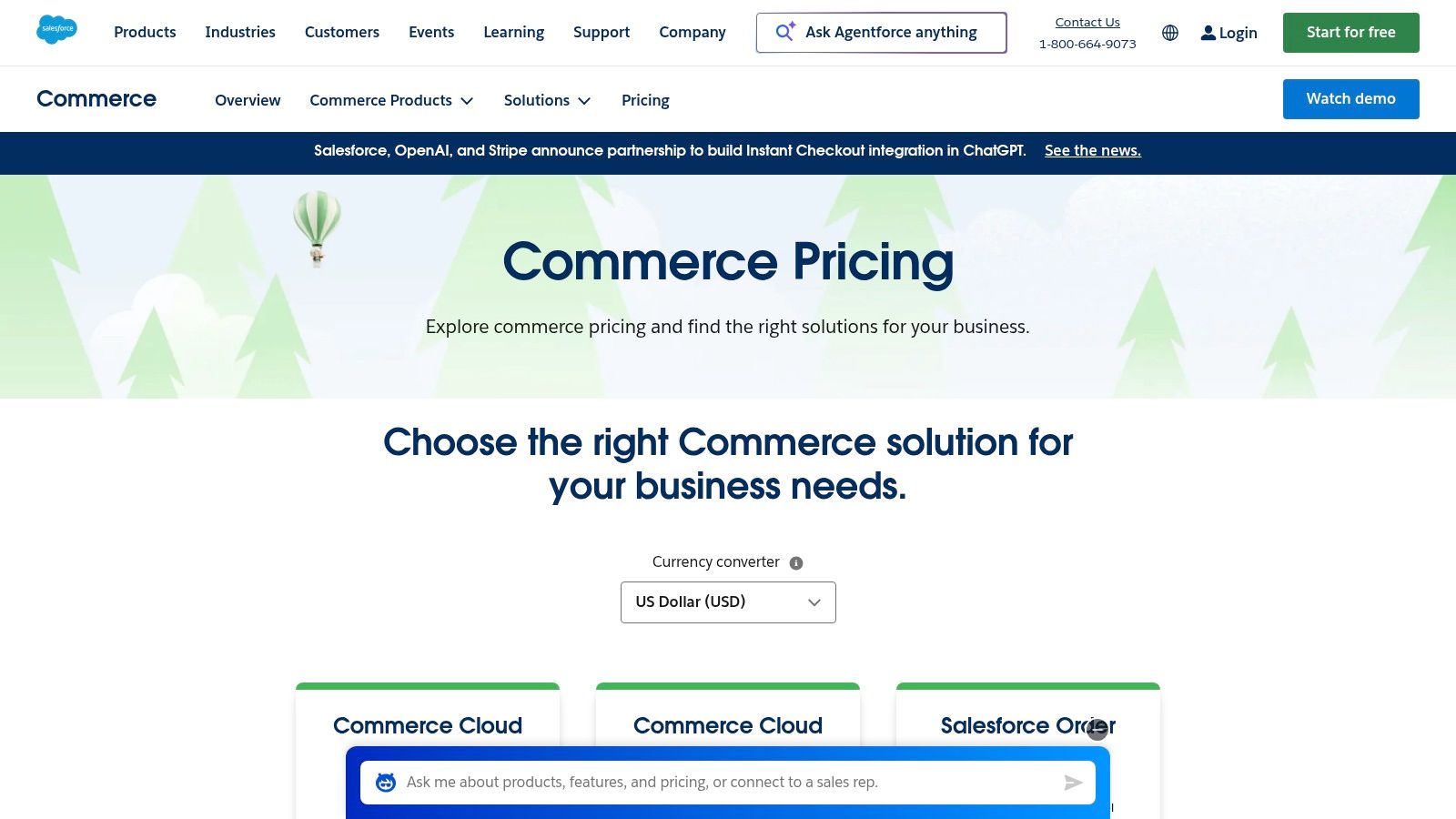
The platform is engineered for global scale, reliability, and sophisticated functionalities like AI-powered merchandising with Einstein. Its B2C and B2B editions, combined with order management and POS options, create a comprehensive solution for managing intricate commerce logistics. Explore how headless architecture can complement enterprise systems in our guide to open-source headless CMS solutions.
Key Features & Considerations
- Unified Commerce: Combines digital commerce, order management, and point-of-sale into one platform for a seamless customer journey.
- AI-Powered Personalization: Leverages Salesforce Einstein AI to deliver personalized product recommendations, search results, and customer insights.
- Salesforce Ecosystem Integration: Native connectivity with Sales Cloud and Marketing Cloud allows for unparalleled customer data consolidation and activation.
- Implementation & Cost: Pricing is customized based on Gross Merchandise Value (GMV), and complex implementations typically require certified expert partners, impacting the total cost of ownership.
Top 12 eCommerce CMS Comparison
| Platform | Unique features (✨) | Quality & UX (★) | Pricing / Value (💰) | Target audience (👥) | Best for (🏆) |
|---|---|---|---|---|---|
| Shopify | Hosted all‑in‑one: payments, POS, app marketplace ✨ | Fast setup, reliable hosting, strong checkout ★★★★ | Tiered plans; apps raise TCO; gateway fees 💰 | SMB → Enterprise (Shopify Plus) 👥 | Quick launch & checkout conversion 🏆 |
| WooCommerce | Deep WordPress integration; full customization ✨ | Content & SEO friendly ★★★★ | Free core; hosting & extensions add cost 💰 | Content-driven sites, agencies, devs 👥 | SEO-first stores & full ownership 🏆 |
| Adobe Commerce (Magento) | Advanced B2B/catalog, flexible deployment ✨ | Extremely powerful but complex ★★★ | Enterprise licensing & high TCO 💰 | Large enterprises, complex catalogs 👥 | Complex B2B/enterprise workflows 🏆 |
| BigCommerce | Native B2B, headless APIs, no platform txn fees ✨ | Robust out‑of‑the‑box features ★★★★ | Mid‑high; fewer add‑ons needed 💰 | Growing brands, multi‑store sellers 👥 | API‑first scale without txn fees 🏆 |
| Wix eCommerce | Drag‑and‑drop + AI design helpers, 900+ templates ✨ | Easiest path to polished storefronts ★★★ | Transparent SMB plans; affordable 💰 | Solo sellers & small teams 👥 | Fast, simple polished stores 🏆 |
| Squarespace Commerce | Design‑forward templates & Fluid Engine ✨ | Best‑in‑class aesthetics & ease ★★★★ | Clear pricing; mid SMB value 💰 | Visual brands, creators, boutiques 👥 | Aesthetics + content-driven stores 🏆 |
| Webflow Ecommerce | Pixel‑level design + CMS collections; headless friendly ✨ | Designer‑centric, performant ★★★★ | Mid; item/fee limits vary by plan 💰 | Design teams, brand‑focused stores 👥 | Pixel‑perfect, content‑rich shops 🏆 |
| Ecwid by Lightspeed | Embeddable store widget + Instant Site ✨ | Very fast integration; lightweight ★★★ | Free/low entry; clear upgrade path 💰 | Sites needing bolt‑on ecommerce 👥 | Add ecommerce to any site quickly 🏆 |
| Shift4Shop (3dcart) | PCI‑certified hosting; broad built‑ins ✨ | Reliable uptime; feature‑rich ★★★ | High value for U.S. merchants (free plan) 💰 | U.S. sellers, value‑focused merchants 👥 | Best value for Shift4 users in US 🏆 |
| PrestaShop | Modular open‑source; strong multi‑currency support ✨ | Flexible but self‑host complexity ★★★ | Free core; paid modules/agencies 💰 | Multilingual stores, developers 👥 | Open‑source international stores 🏆 |
| OpenCart | Lightweight open‑source + large extensions market ✨ | Simple admin; needs maintenance ★★★ | No license fees; hosting & modules cost 💰 | Cost‑conscious merchants, devs 👥 | Low‑cost extensible solution 🏆 |
| Salesforce Commerce Cloud | OMS, Einstein personalization, Salesforce ecosystem ✨ | Enterprise‑grade reliability & scale ★★★★ | Custom/GMV pricing; high TCO 💰 | Large retailers & global brands 👥 | Enterprise omnichannel & personalization 🏆 |
Making Your Final Decision
Navigating the landscape of e-commerce platforms can feel overwhelming, but this deep dive into the 12 leading contenders should provide a clear framework for your decision. We've dissected everything from all-in-one SaaS giants like Shopify to endlessly customizable open-source powerhouses like WooCommerce and Adobe Commerce. The central takeaway is this: the best ecommerce CMS is not a one-size-fits-all solution, but a strategic asset that must align perfectly with your business model, technical capabilities, and long-term growth ambitions.
Your choice hinges on a careful evaluation of your unique circumstances. For entrepreneurs and small businesses prioritizing speed-to-market and operational simplicity, the managed hosting and intuitive interfaces of Shopify, BigCommerce, or Wix are difficult to beat. Conversely, content-driven brands that leverage blogging and SEO as primary growth channels will find the unmatched flexibility of WooCommerce within the WordPress ecosystem to be a superior long-term investment.
Key Factors to Guide Your Selection
Before committing to a platform, create a checklist based on these critical decision points. This exercise will help you move beyond marketing claims and focus on the practical realities of running your business.
- Total Cost of Ownership (TCO): Look beyond the monthly subscription fee. Factor in transaction fees, the cost of essential apps and plugins, premium themes, and potential developer expenses for customization. Open-source options may be "free" to download, but hosting, security, and maintenance costs can add up significantly.
- Scalability and Performance: Where do you see your business in five years? A platform like Squarespace is excellent for starting out, but a high-volume enterprise may require the robust infrastructure of Adobe Commerce or Salesforce Commerce Cloud to handle complex catalogs and global traffic spikes without performance degradation.
- Technical Expertise: Be honest about your team's skills. Do you have in-house developers comfortable with PHP, or do you need a no-code, drag-and-drop solution? Choosing a platform that exceeds your technical resources will lead to frustration and dependency on expensive third-party support.
- Integration and Extensibility: Your ecommerce CMS is the hub of your business, not an island. Map out your essential tools for marketing automation, CRM, ERP, and accounting. Verify that your chosen platform offers seamless, well-supported integrations to create a cohesive tech stack.
Your Actionable Next Steps
With your analysis complete, the path forward becomes clearer. We recommend shortlisting your top two or three candidates and taking full advantage of their free trials. Use this trial period to simulate real-world tasks: add products, configure shipping rules, test the checkout process, and explore the app marketplace. This hands-on experience is invaluable and will reveal practical strengths and weaknesses that a feature list alone cannot.
Ultimately, selecting the right ecommerce CMS is one of the most impactful decisions you will make. It sets the foundation for your customer experience, operational efficiency, and ability to adapt in a competitive market. By aligning your business needs with the detailed insights provided in this guide, you are well-equipped to choose a platform that not only meets your current requirements but also empowers your future growth.