12 Best CMS for Ecommerce Platforms in 2025
Discover the 12 best CMS for ecommerce platforms in 2025. Our in-depth review covers features, pricing, and pros/cons to help you choose the right solution.

Selecting the right Content Management System (CMS) is a foundational decision for your online business. A powerful CMS for ecommerce does more than just display products; it integrates inventory management, marketing automation, payment processing, and content strategy into a cohesive customer journey. The platform you choose directly impacts scalability, operational efficiency, and your ability to adapt to market changes. With countless options available, from turnkey SaaS solutions to highly flexible open-source frameworks, identifying the optimal fit for your specific business needs can be a significant challenge.
This guide provides a detailed, analytical breakdown of the 12 leading ecommerce CMS platforms to help you make an informed decision. We move beyond marketing claims to examine each system's ideal use case, core architectural strengths, pricing structures, and critical limitations. While our focus here is on platforms with deep commerce functionalities, some businesses may find their needs met by more generalized tools. For those scenarios, you might also consider a broader range of the best website builder platforms for a simpler, content-first approach.
For each option in this list, you'll find a clear overview, screenshots, direct links, and an honest assessment to help you find the engine that will power your store's growth.
1. Pimcore — Open Source, E-commerce and Enterprise CMS
Pimcore distinguishes itself as a premier open-source cms for ecommerce, functioning as a comprehensive Digital Experience Platform (DXP). It uniquely consolidates content management (CMS), e-commerce, product information management (PIM), and digital asset management (DAM) into a single, cohesive framework. This integrated approach eliminates the need for disparate systems, streamlining operations for businesses managing complex product data and omnichannel sales strategies. It's engineered for enterprises that require a robust, flexible foundation to deliver sophisticated, content-rich shopping experiences.
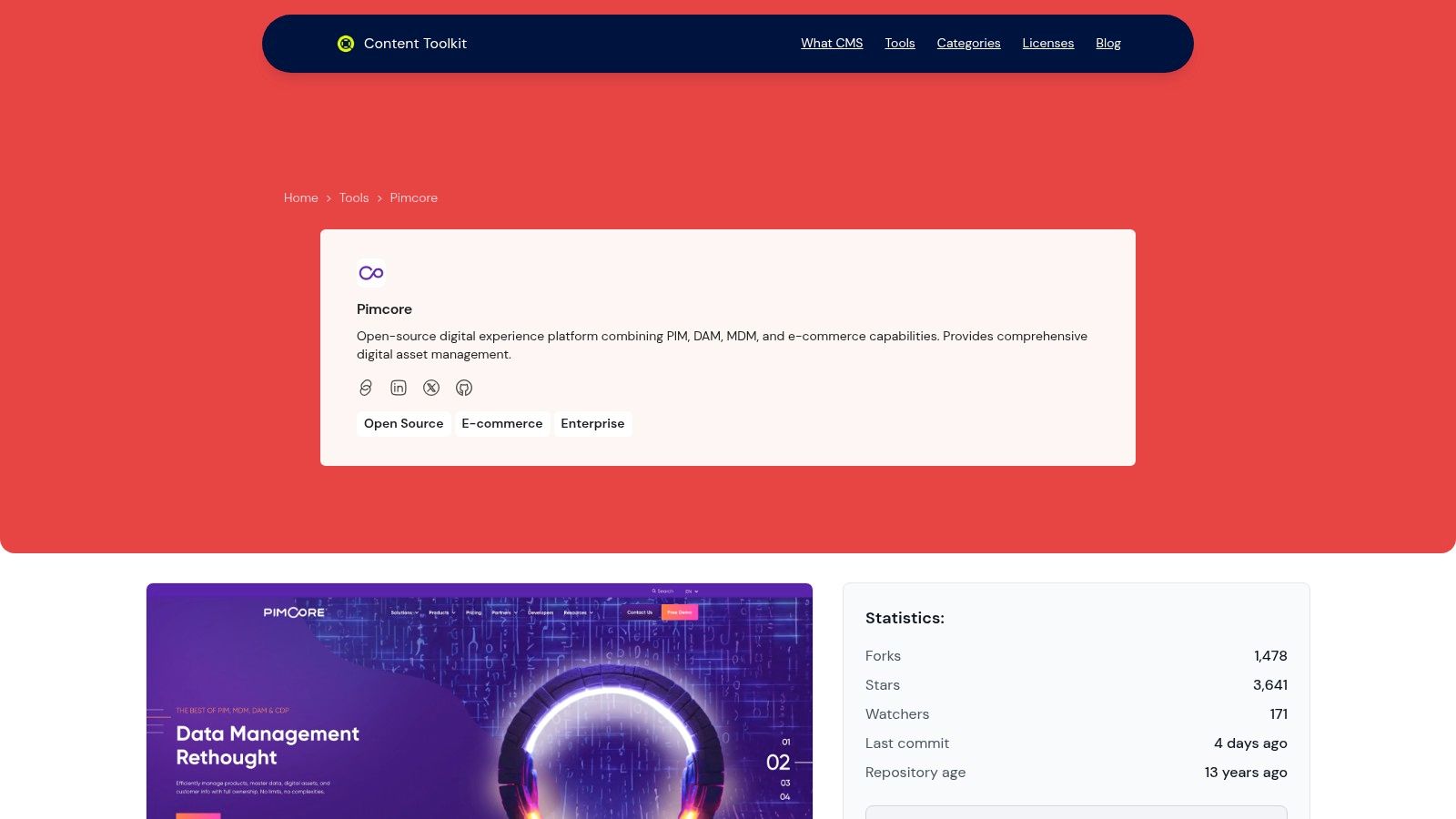
Pimcore's true power lies in its data-centric architecture, making it an exceptional choice for organizations with extensive and intricate product catalogs. The platform's headless capabilities allow for seamless content and product syndication across various touchpoints, from web and mobile apps to IoT devices and in-store displays. This makes it ideal for executing advanced omnichannel strategies where consistency and personalization are key.
Key Strengths and Use Cases
- Integrated Data Management: The fusion of PIM/MDM with the CMS allows for a "single source of truth." A practical use case involves a global manufacturer managing thousands of SKUs with region-specific attributes, pricing, and marketing content, all governed from one central hub.
- Headless Commerce: Pimcore enables a decoupled architecture, giving developers the freedom to build custom front-end experiences using modern frameworks like React or Vue.js while leveraging Pimcore’s powerful backend for commerce and data management.
- Scalability: As an open-source platform built on the Symfony framework, Pimcore is highly scalable and customizable. It is best suited for mid-market to enterprise-level businesses planning for significant growth and requiring a system that can evolve with their needs.
While its extensive feature set presents a steeper learning curve, the platform's flexibility is unparalleled. Organizations with access to skilled developer resources will find Pimcore an incredibly powerful and cost-effective solution for building next-generation digital commerce platforms. For those evaluating similar powerful platforms, you can find a curated list of top-tier solutions in our e-commerce CMS collection.
Website: https://www.contenttoolkit.co/tools/pimcore
2. Shopify
Shopify is a dominant force in the ecommerce landscape, functioning as an all-in-one hosted solution with a powerful, integrated CMS. It's designed for businesses that prioritize speed to market, ease of use, and a highly optimized checkout experience. The platform combines a user-friendly storefront editor, robust product management, and built-in blogging, making it an excellent CMS for ecommerce from the ground up.

What truly sets Shopify apart is its ecosystem. The platform boasts an extensive app store that allows for nearly limitless customization, from adding subscription models to integrating with complex ERP systems. Its native payment processor, Shopify Payments, and the accelerated Shop Pay checkout are engineered for maximum conversion, a critical advantage for direct-to-consumer brands. This holistic approach simplifies the technical overhead traditionally associated with running an online store. For a deeper dive into its capabilities, you can find a comprehensive Shopify analysis here: best cms for ecommerce.
Key Features & Considerations
- Pros: Extremely fast setup and low maintenance, best-in-class checkout conversion, and a massive app ecosystem for extending functionality. It scales effectively from new startups to large enterprises with Shopify Plus.
- Cons: Transaction fees apply if not using Shopify Payments. Reliance on apps for advanced features can significantly increase monthly costs, and you have less control over the hosting environment compared to open-source alternatives.
- Pricing: Plans start at $29/month for "Basic," scaling up to "Advanced" at $299/month, with custom pricing for Shopify Plus enterprise clients.
Website: https://www.shopify.com
3. WooCommerce (on WordPress)
WooCommerce is an open-source ecommerce plugin that transforms a WordPress website into a powerful and fully customizable online store. As the most popular ecommerce platform globally, it offers unparalleled flexibility, making it an excellent cms for ecommerce for businesses that require full control over their data, design, and functionality. Unlike hosted solutions, WooCommerce gives you complete ownership of your digital storefront, from the underlying code to the customer data.
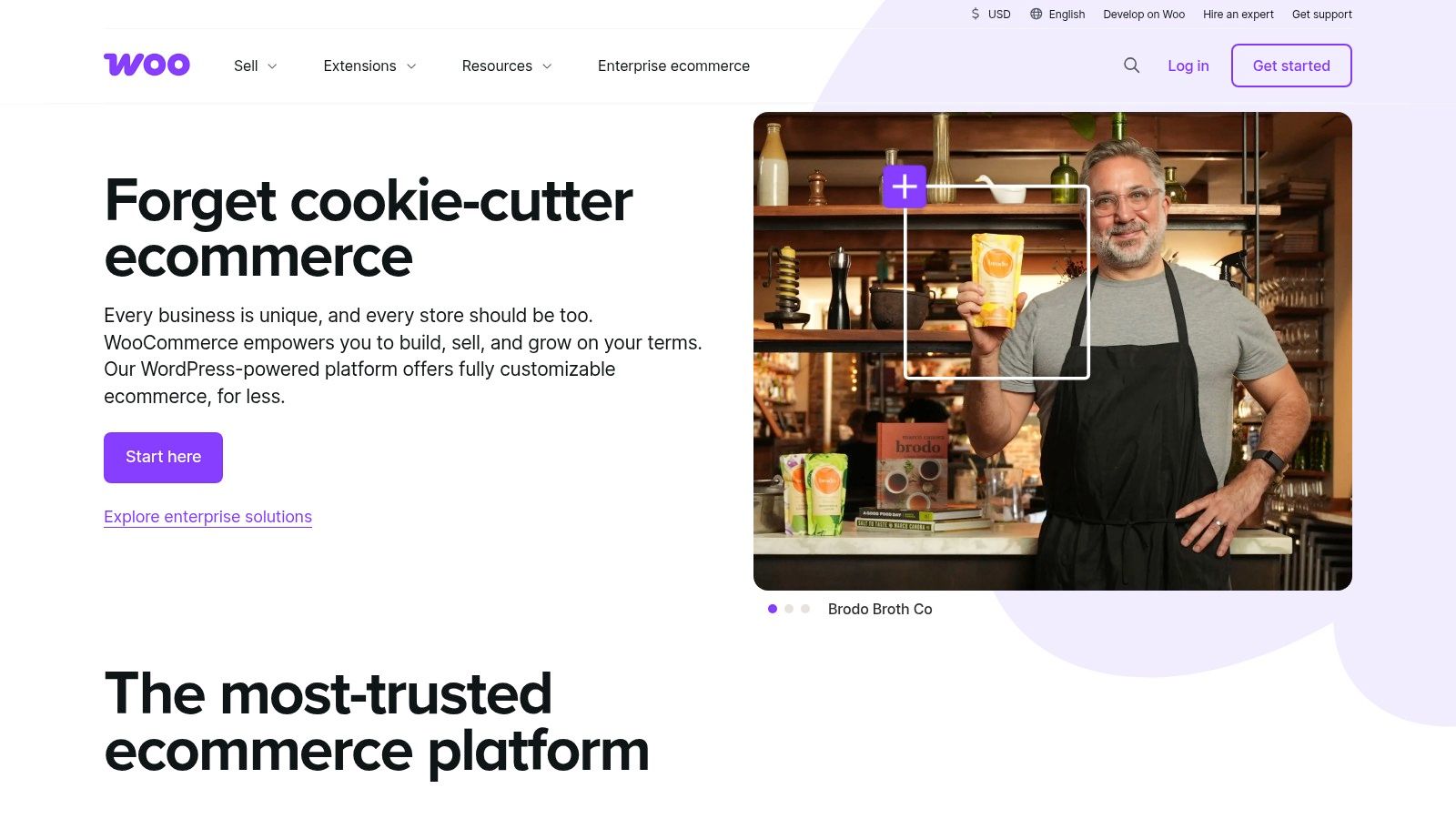
What truly defines the WooCommerce experience is its limitless potential for customization, backed by a massive global community of developers and users. The core plugin is free, but its power is unlocked through thousands of official and third-party extensions. These allow you to implement virtually any feature imaginable, including subscriptions, bookings, complex product configurations, and B2B wholesale portals. This modular approach allows businesses to build a store tailored precisely to their needs, without being confined to a specific platform's feature set.
Key Features & Considerations
- Pros: Maximum flexibility and ownership with no monthly platform fees. The huge developer ecosystem provides endless themes, plugins, and community support for any technical challenge.
- Cons: Users are responsible for managing their own hosting, security, performance tuning, and software updates, which requires more technical expertise. The total cost can vary widely depending on hosting infrastructure, premium extensions, and development needs.
- Pricing: The core WooCommerce plugin is free. Costs are incurred for web hosting (typically starting around $10-$30/month), a domain name, a theme (free or premium), and any paid extensions required for advanced functionality.
Website: https://woocommerce.com
4. BigCommerce
BigCommerce is a leading SaaS ecommerce platform that differentiates itself with a powerful set of native features designed for scaling businesses. It functions as a flexible and open CMS for ecommerce, aiming to reduce reliance on third-party apps by building more core functionality directly into the platform. This approach is particularly beneficial for brands with complex catalogs, international ambitions, or B2B sales channels who need robust tools out of the box.
What makes BigCommerce stand out is its commitment to "Open SaaS," blending the ease of a hosted solution with the flexibility of open-source. It offers strong headless capabilities through extensive APIs and SDKs, allowing businesses to create unique, composable commerce experiences on any front-end framework. Furthermore, its native multi-storefront functionality and zero platform transaction fees on all plans provide significant advantages for merchants looking to expand their operations without incurring punitive costs. This strategic balance caters to fast-growing brands that require both power and agility.
Key Features & Considerations
- Pros: Powerful built-in features like faceted search and promotions reduce app bloat and cost. It scales extremely well for fast-growing mid-market and B2B businesses, with no transaction fees.
- Cons: Annual online sales thresholds can automatically trigger mandatory plan upgrades, which can be unexpected. The theme and app marketplaces are less extensive compared to Shopify's ecosystem.
- Pricing: Standard plans range from "Standard" at $29/month to "Pro" at $299/month, with custom pricing for Enterprise-level clients.
Website: https://www.bigcommerce.com
5. Adobe Commerce (formerly Magento) + Magento Open Source
Adobe Commerce, built on the robust Magento platform, is an enterprise-grade powerhouse designed for complex B2B and B2C operations that demand deep customization. It’s available as a PaaS solution (Adobe Commerce Cloud) and a free, self-hosted version (Magento Open Source), making it a uniquely flexible CMS for ecommerce. The platform is renowned for its ability to handle intricate product catalogs, multi-storefront requirements, and international sales with unparalleled control.
What truly distinguishes Adobe Commerce is its open, API-first architecture, making it a prime candidate for headless and composable commerce strategies. This extensibility allows for seamless integration with complex backend systems like ERPs and PIMs. With advanced B2B features like company accounts, quote management, and custom pricing, it directly addresses the needs of wholesalers and manufacturers. While the learning curve is steep, the platform’s power for businesses with specific, complex requirements is unmatched. For a deeper look at its capabilities, you can find a detailed Adobe Commerce analysis here: best cms for ecommerce.
Key Features & Considerations
- Pros: Extreme flexibility and extensibility with strong enterprise tooling for B2B and complex catalogs. It benefits from a large, established ecosystem of development agencies and extensions.
- Cons: Enterprise licensing for Adobe Commerce can be expensive, requiring custom quotes. The free Magento Open Source edition demands significant developer expertise for hosting, security, and ongoing maintenance.
- Pricing: Adobe Commerce pricing is available via a custom quote based on Gross Merchandise Value (GMV). Magento Open Source is free to download, but incurs hosting and development costs.
Website: https://business.adobe.com/products/commerce/adobe-commerce.html
6. Wix eCommerce
Wix has evolved from a general website builder into a powerful platform with a surprisingly robust ecommerce CMS. It is designed for small businesses, artists, and entrepreneurs who need a visually stunning online store without writing a single line of code. The platform integrates a highly intuitive drag-and-drop editor with comprehensive business management tools, making it an excellent all-in-one CMS for ecommerce for users prioritizing design freedom and ease of use.
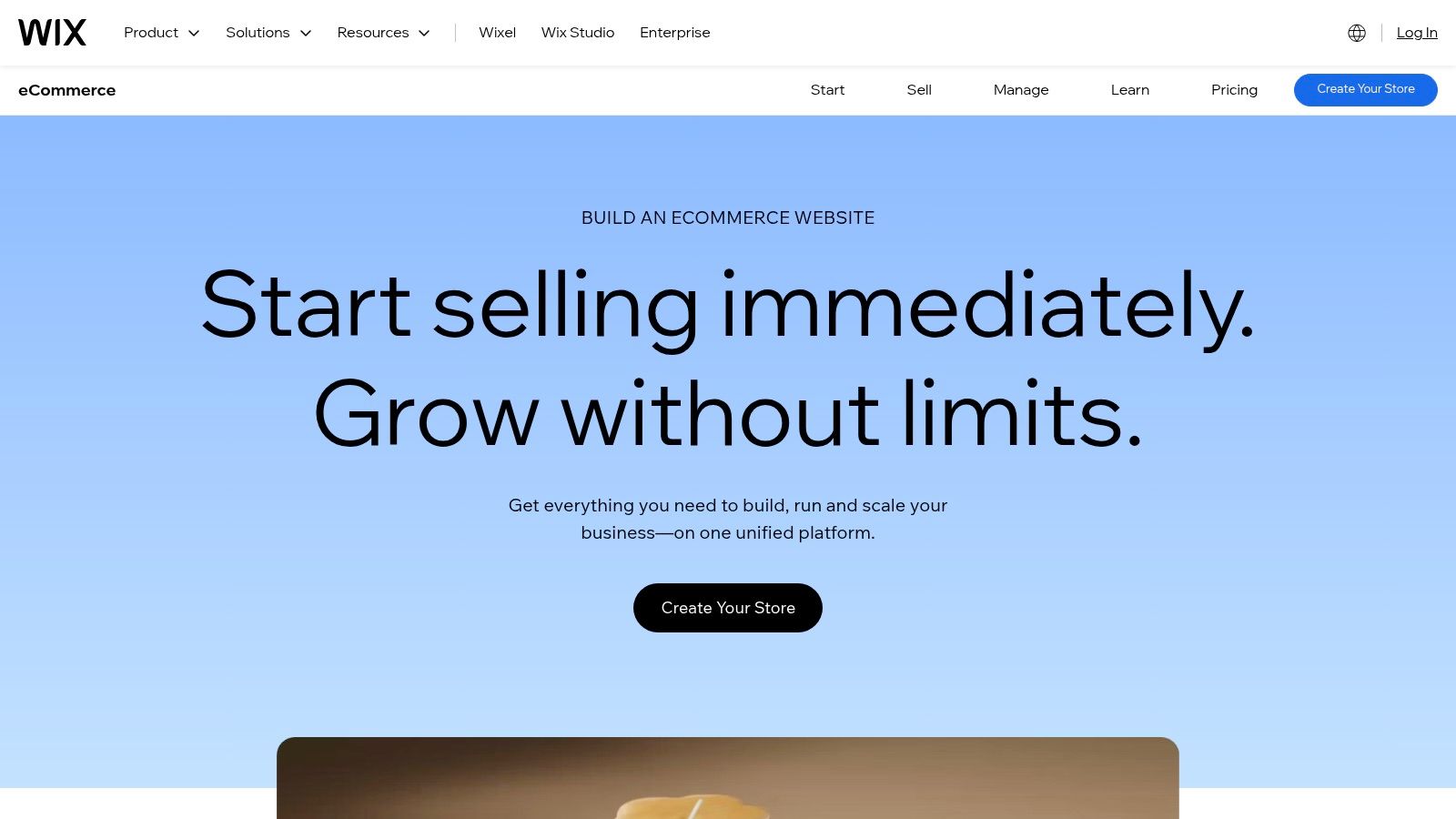
What makes Wix stand out is its balance between creative control and built-in functionality. With over 900 templates and the advanced Wix Studio for developers, it offers unparalleled design flexibility. Its native tools for SEO, email marketing, automations, and multi-channel selling are seamlessly integrated, reducing the need for third-party apps for core operations. This approach provides a cohesive, managed environment where launching and growing a store feels accessible. For more insights on platforms like this, explore our collection of website builder CMS options here: Learn more about website builder platforms.
Key Features & Considerations
- Pros: Extremely intuitive drag-and-drop builder with immense design flexibility. Hosting, security, and a suite of marketing tools are included in the package, simplifying the tech stack for small businesses.
- Cons: Not ideally suited for stores with very large, complex product catalogs or intricate B2B requirements. Advanced ecommerce features often require higher-tier plans or apps from the App Market.
- Pricing: Ecommerce plans start at $27/month ("Core"), scaling to $59/month ("Business"), with custom pricing available for enterprise-level "Business Elite" plans.
Website: https://www.wix.com/ecommerce/website
7. Squarespace Commerce
Squarespace Commerce extends its renowned design-first website builder into a capable ecommerce platform, ideal for brands where aesthetics and content are paramount. It excels at seamlessly integrating a beautiful storefront with robust blogging, portfolios, and service-based offerings like appointment scheduling. This makes it a standout CMS for ecommerce for creatives, service providers, and businesses that lead with a strong visual identity and narrative.

What sets Squarespace apart is its all-in-one, curated approach. You don't need third-party apps for core functionalities like selling subscriptions, digital products, or memberships; these tools are built directly into the platform. Its award-winning templates are engineered to be visually stunning and mobile-responsive out of the box, allowing merchants to launch a polished, professional-looking store with minimal technical skill. For content-led brands, the integration between blog posts and product listings provides a powerful tool for contextual commerce.
Key Features & Considerations
- Pros: Industry-leading design templates and intuitive drag-and-drop editor. Strong native support for content, services, and digital products. Good analytics and on-domain checkout capabilities are available on higher-tier plans.
- Cons: The app ecosystem is significantly smaller than those of Shopify or WooCommerce, limiting advanced integrations. Transaction fees apply on lower-tier plans, and processing fees are standard across all.
- Pricing: Commerce plans start at $27/month (billed annually) for "Business" (with a 3% transaction fee) and go up to $49/month for "Advanced Commerce" (with 0% transaction fees).
Website: https://www.squarespace.com
8. Square Online (by Block/Square)
Square Online excels as a unified commerce platform, tightly integrating a user-friendly website builder with its robust ecosystem of payment processing, POS hardware, and business management tools. It's purpose-built for businesses operating both online and in-person, such as retailers, restaurants, and service providers. This platform functions as a specialized CMS for ecommerce by automatically syncing inventory, orders, and customer data across all sales channels, eliminating operational friction.
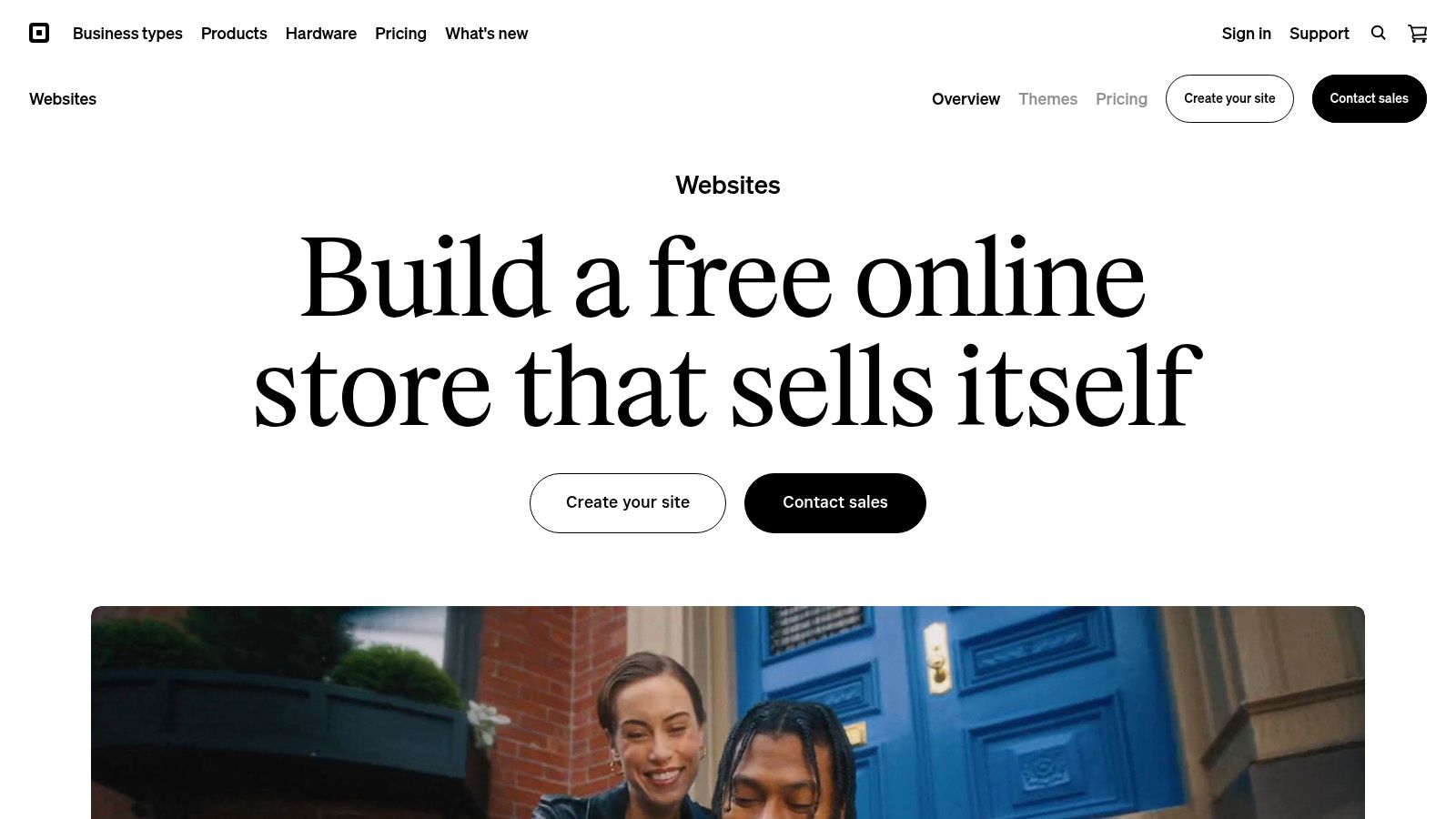
What makes Square Online unique is its focus on omnichannel commerce from the ground up. It offers everything from basic online storefronts and checkout links to sophisticated features like native loyalty programs, appointment booking, and Afterpay integration. This holistic approach simplifies the tech stack for small to medium-sized businesses, combining website management, payment processing, and even banking tools under a single, cohesive interface. The ability to manage both digital and physical operations from one dashboard is its core competitive advantage.
Key Features & Considerations
- Pros: Seamless integration between online and in-person sales, with synchronized inventory. A free-to-start plan is available, making it highly accessible, and it features transparent, flat-rate processing fees.
- Cons: Less suitable for large, complex catalogs due to more limited customization options compared to dedicated ecommerce-first platforms. Advanced marketing and site features often require paid monthly add-ons.
- Pricing: A free plan is available (processing fees apply). Paid plans, "Plus" and "Premium," offer more advanced features and lower processing rates, with custom pricing for larger businesses.
Website: https://squareup.com/online-store
9. Ecwid by Lightspeed
Ecwid by Lightspeed offers a unique approach, acting less like a traditional all-in-one platform and more like a powerful ecommerce widget. It is designed for businesses that already have a website, blog, or social presence and want to add selling capabilities without a complete rebuild. This makes it an incredibly versatile CMS for ecommerce integration, allowing you to embed a full-featured store on any site, regardless of the original platform.
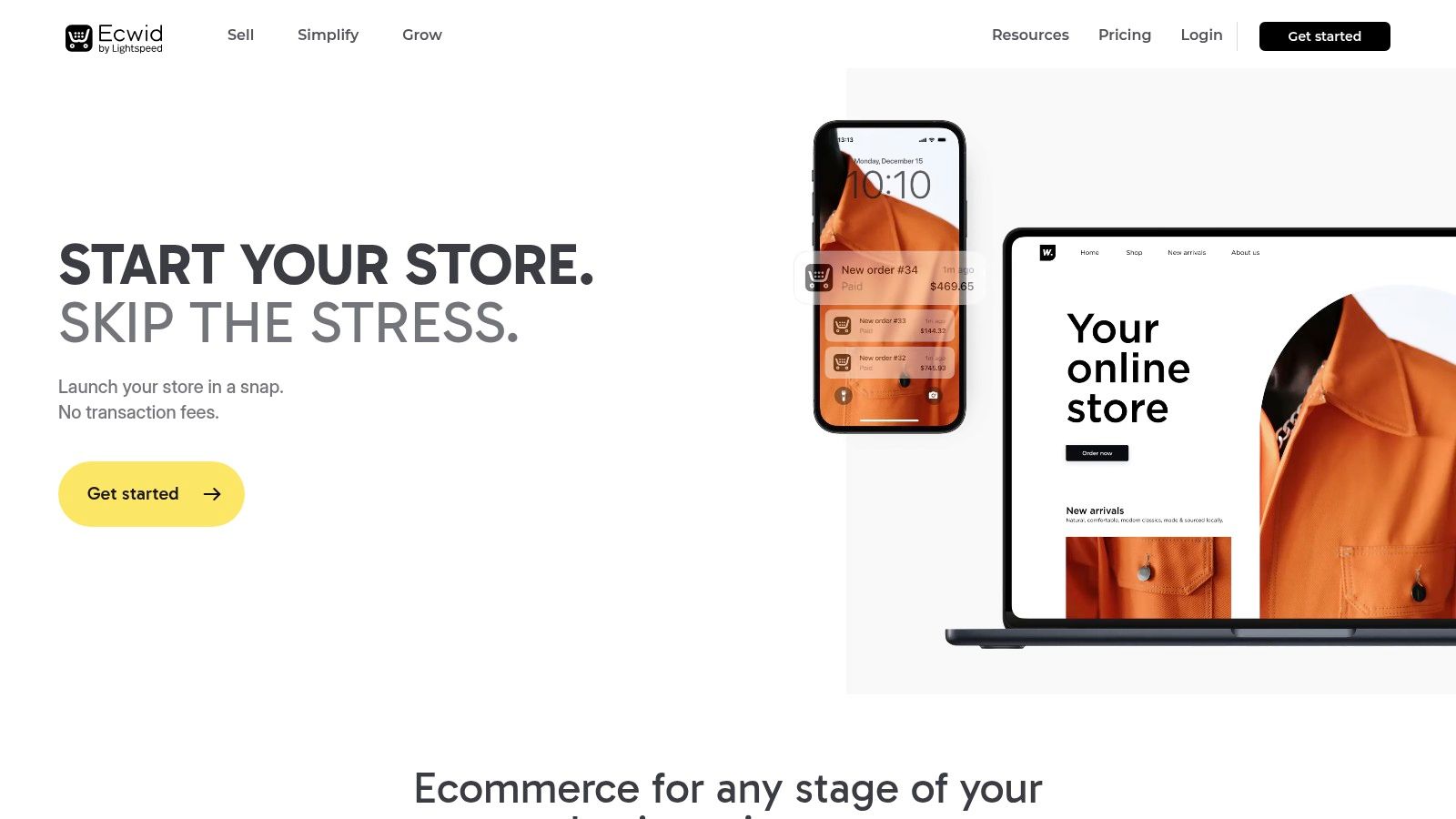
What truly sets Ecwid apart is its "add-on" philosophy. You can add your store to a WordPress site, a Squarespace page, and your Facebook profile simultaneously, all managed from a single centralized dashboard. For those without a site, its Instant Site feature provides a simple one-page store to get started quickly. This flexibility is ideal for content creators, bloggers, or service-based businesses looking to monetize their existing audience without disrupting their established online presence.
Key Features & Considerations
- Pros: Extremely fast and simple to add ecommerce functionality to any existing website or social channel. It offers a generous free plan for basic needs and is very easy to manage without technical expertise.
- Cons: As an add-on, it has less deep content management flexibility compared to a full CMS. Advanced ecommerce tools and a larger product catalog require upgrading to paid plans.
- Pricing: A Free plan is available for up to 5 products. Paid plans start with "Venture" at $19/month and scale to "Business" at $39/month and "Unlimited" at $99/month.
Website: https://www.ecwid.com
10. PrestaShop (Open Source, Hosted, and Enterprise)
PrestaShop is a mature open-source ecommerce platform that uniquely offers merchants a choice between a free, self-hosted Classic edition and managed hosted plans. This flexibility makes it an appealing CMS for ecommerce for businesses wanting the freedom of open-source customization without being locked into a specific hosting model. It's particularly strong in the European market but has a growing global presence.
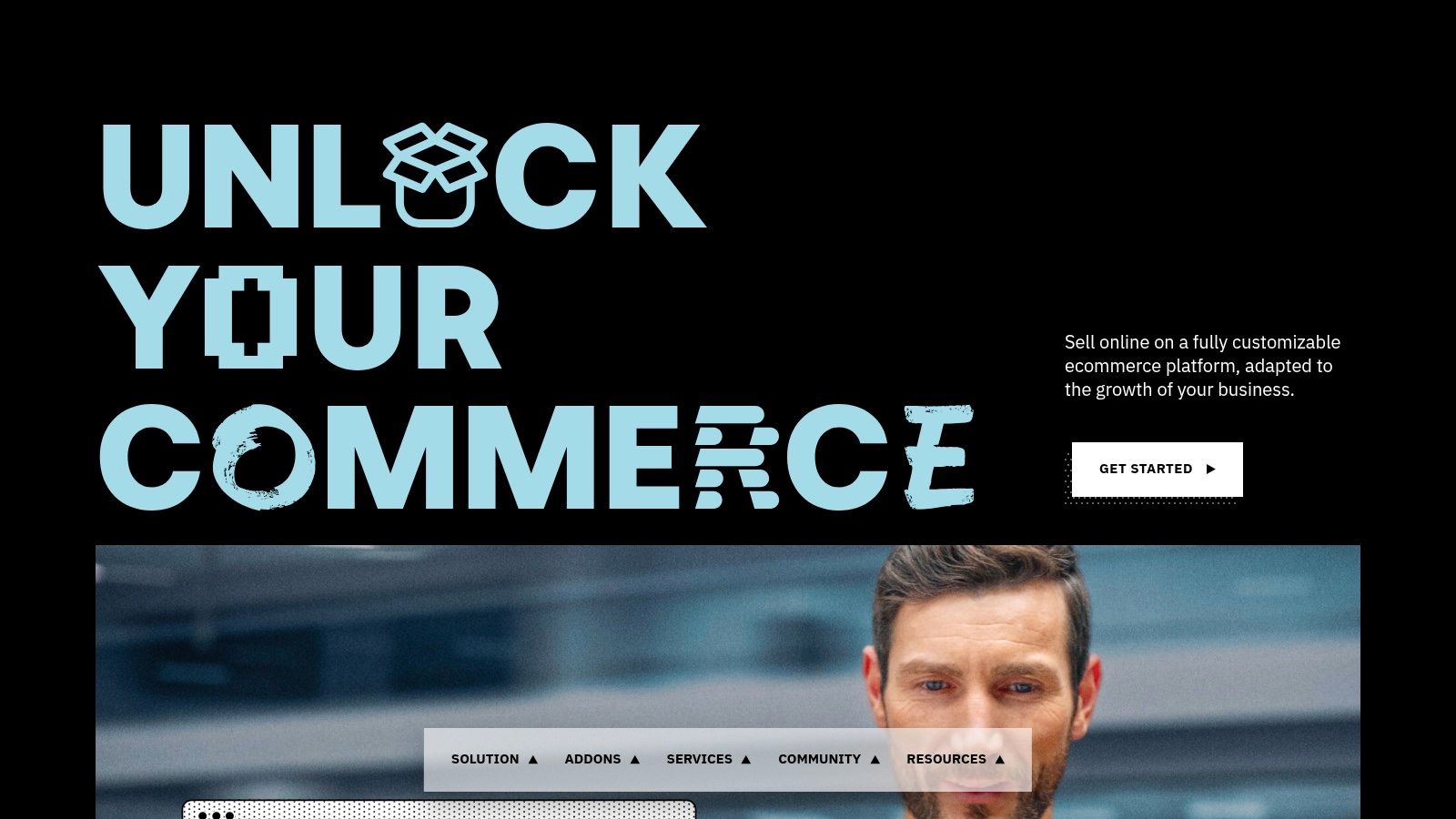
The platform's key differentiator is its hybrid approach. Merchants can start with the free open-source version and later migrate to a hosted solution for more support and stability, or vice versa. The extensive marketplace features over 3,200 modules and themes, allowing for deep customization of everything from front-end design to back-end logistics. For larger businesses, PrestaShop Platform provides enterprise-grade, SLA-backed hosting and dedicated support, offering a scalable path for growth.
Key Features & Considerations
- Pros: High degree of flexibility with self-hosted or managed hosting options. No revenue-sharing fees on enterprise plans, and the transparent add-on ecosystem provides clear costs for extending functionality.
- Cons: The self-hosted version requires significant technical expertise or agency support for setup and maintenance. The quality and documentation of third-party extensions can be inconsistent.
- Pricing: The self-hosted "Classic" version is free (plus hosting costs). Hosted plans are available with custom pricing, and enterprise solutions are tailored to specific business needs.
Website: https://www.prestashop.com
11. Shopware
Shopware is a modern, API-first ecommerce platform built on a flexible, open-source core. It excels at merging content and commerce, making it a powerful CMS for ecommerce for brands that require sophisticated storytelling and headless or composable architectures. The platform is particularly strong in the European market but is gaining traction globally for its robust B2B capabilities and developer-friendly environment.
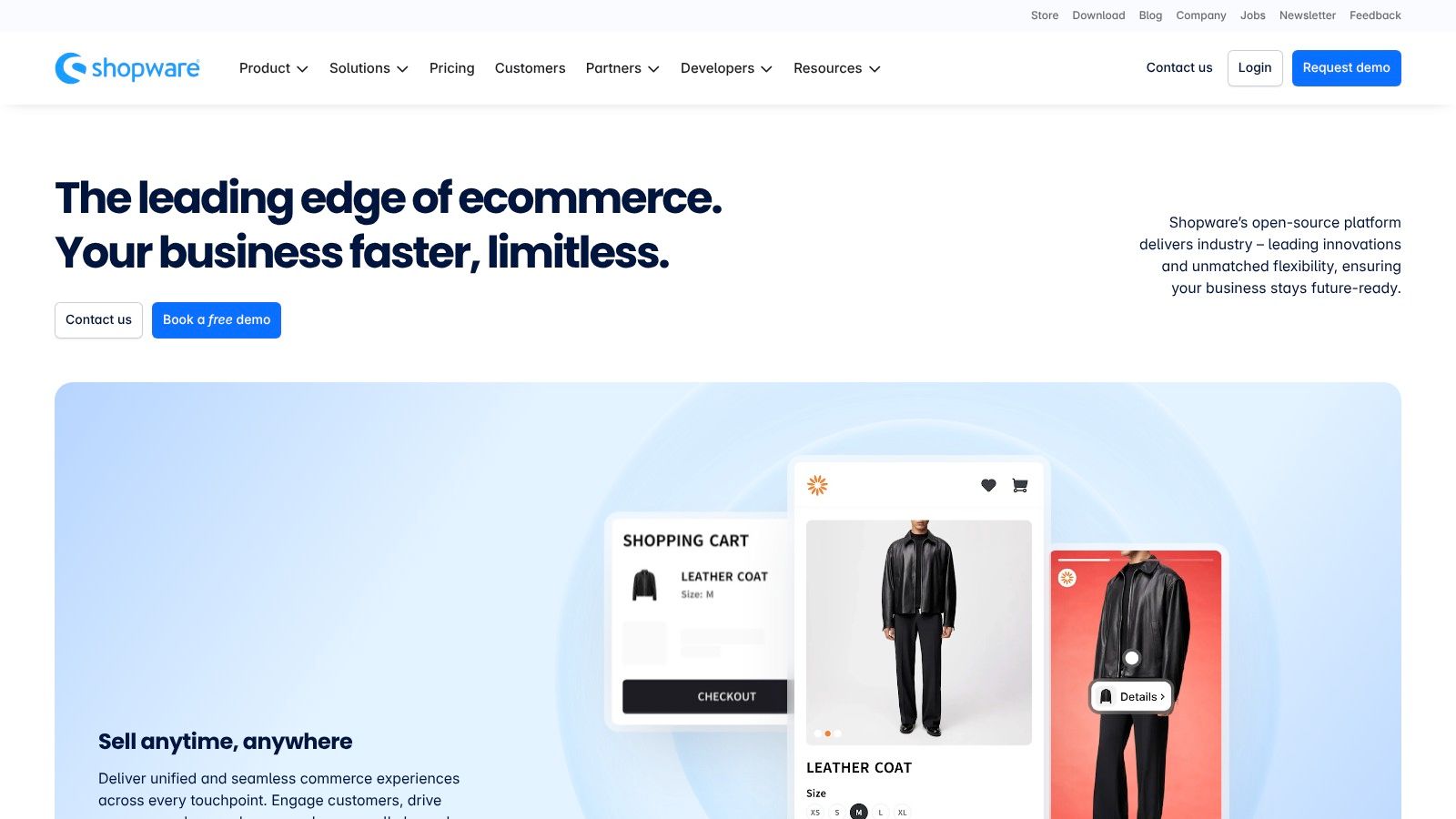
The standout feature is "Shopping Experiences," an integrated CMS that allows users to create rich, dynamic landing pages and product detail layouts without code. This flexibility, combined with its headless-ready nature, allows businesses to power multiple front-end experiences from a single backend. Shopware offers a free, self-hosted Community Edition for developers and startups, alongside commercial SaaS and PaaS plans for scaling businesses with more complex needs like multi-inventory and advanced B2B quoting.
Key Features & Considerations
- Pros: Strong integration of content and commerce with enterprise B2B readiness. Offers a choice between a free Community Edition for ultimate control and commercial paid plans for managed hosting and support.
- Cons: Commercial plans are priced for established mid-market and enterprise customers. The community and partner network is smaller in the US compared to Europe, which can affect third-party support and developer availability.
- Pricing: A free, self-hosted Community Edition is available. Commercial plans, "Shopware Rise," "Evolve," and "Beyond," are custom-priced for mid-market and enterprise clients.
Website: https://www.shopware.com
12. Shift4Shop (formerly 3dcart)
Shift4Shop, previously known as 3dcart, is a hosted ecommerce platform distinguished by its comprehensive suite of built-in features, eliminating the need for many third-party apps. It offers a robust combination of store building, product management, and content tools, positioning it as a capable CMS for ecommerce, particularly for businesses seeking rich functionality out of the box. The platform is designed for merchants who value deep B2B capabilities and advanced promotional tools without a heavy reliance on a plugin ecosystem.
The platform’s unique selling proposition is its End-to-End Ecommerce plan, which provides a feature-rich platform at no monthly cost for U.S.-based merchants who use the Shift4 payment processor. This model provides an exceptionally cost-effective entry point for businesses that fit the criteria. For others, Shift4Shop offers traditional paid plans that are competitively priced given the platform’s extensive built-in feature set, including everything from product personalization to customer relationship management tools and a 99.99% uptime SLA.
Key Features & Considerations
- Pros: An extensive set of built-in features reduces app dependency. Strong B2B modules like customer-specific pricing are included. The free End-to-End plan offers significant value for U.S. merchants.
- Cons: The free plan is restricted to U.S. businesses using Shift4 Payments. Its theme and app ecosystem is smaller and less developed than those of major competitors like Shopify or BigCommerce.
- Pricing: The End-to-End Ecommerce plan is free for U.S. merchants. Paid plans like Basic Store start at $29/month, scaling up to Pro Store at $229/month.
Website: https://www.shift4shop.com
Top 12 Ecommerce CMS Comparison
| CMS Platform | Core Features ✨ | User Experience ★★★★☆ | Value Proposition 💰 | Target Audience 👥 | Unique Selling Points 🏆 | Pricing 💰 |
|---|---|---|---|---|---|---|
| Pimcore | Open-source DXP with CMS, PIM, DAM, MDM, headless commerce | Powerful but steep learning curve | Cost-effective open source for enterprises | Enterprises with complex catalogs | All-in-one open-source platform for content & product mgmt | Open source, low cost |
| Shopify | Hosted ecommerce, built-in CMS, app ecosystem | Fast launch, best-in-class checkout | Scales from startups to enterprise | Startups to enterprise | Extensive integrations and built-in payments | Subscription + apps |
| WooCommerce (WordPress) | Open-source plugin, flexible with thousands of extensions | Full control, requires hosting management | No monthly platform fee; variable costs | Developers & SMBs | Maximum flexibility and ownership | Free core + extensions |
| BigCommerce | SaaS ecommerce, multi-storefront, B2B features | Feature-rich, less app bloat | Built-in features reduce add-ons cost | Fast-growing brands & B2B | No transaction fees, headless SDKs | Subscription |
| Adobe Commerce (Magento) | Enterprise ecommerce, API-first, B2B, deep customization | Highly flexible but complex | Strong enterprise tooling | Large enterprises & agencies | Enterprise-grade with large extension ecosystem | Custom quotes, can be costly |
| Wix eCommerce | Website builder + ecommerce, drag-drop editor | Very quick site builds, design flexibility | All-in-one with hosting/security | Small businesses & creators | Easy to use, hosting included | Subscription |
| Squarespace Commerce | Design-first website builder with ecommerce CMS | Excellent design tools, good analytics | Great for content-led stores | Brands & service providers | Polished templates & integrated payment options | Subscription + fees |
| Square Online | Hosted store with Square POS/payments | Easy in-person + online sales | Free to start and modular fees | Retail, restaurants, service biz | Tight integration with Square ecosystem | Free to start + fees |
| Ecwid by Lightspeed | Embeddable ecommerce, Instant sites, multi-currency | Fast launch on existing sites | Free plan available, great for add-ons | Sellers adding ecommerce to sites | Can embed on multiple sites/social channels | Free + paid plans |
| PrestaShop | Open source + hosted + enterprise options | Flexible but tech required for self-hosting | No revenue share on enterprise plans | Merchants needing hosting choice | Mature open-source with large module ecosystem | Free + hosting fees |
| Shopware | API-first, headless CMS, B2B features | Strong content-commerce integration | Free community edition + paid commercial plans | Mid-market & enterprise | Advanced B2B & Shopping Experiences CMS | Free + commercial plans |
| Shift4Shop (3dcart) | Hosted ecommerce with strong built-in promos, B2B | Dense features, US-only free plan | Cost-effective especially for US merchants | US merchants & B2B | $0 platform fee tied to Shift4 processing | Free US plan + paid plans |
Making Your Final Platform Decision
Navigating the landscape of CMS for ecommerce can feel overwhelming, but the extensive analysis of platforms from Pimcore to Shopify reveals a clear pattern: the "best" platform is the one that aligns perfectly with your unique business context. The decision hinges not on a universal winner, but on a strategic match between your operational needs, technical capabilities, and long-term growth ambitions.
Our exploration has shown distinct categories of solutions. For businesses demanding deep customization, scalability, and data integration, open-source powerhouses like Pimcore, WooCommerce, and Adobe Commerce (Magento) offer unparalleled control. However, this freedom comes with a significant demand for technical resources and development expertise.
Conversely, for entrepreneurs and teams prioritizing speed-to-market, ease of use, and robust, out-of-the-box functionality, hosted SaaS solutions are the clear front-runners. Shopify and BigCommerce dominate this space, providing a managed infrastructure and a vast ecosystem of apps that allow you to focus on marketing and sales rather than server maintenance. For content-driven brands where aesthetics and storytelling are paramount, integrated website builders like Wix and Squarespace offer a seamless blend of commerce and content creation.
A Framework for Your Final Choice
To move from analysis to action, distill your options through a focused lens. Avoid getting distracted by feature-for-feature comparisons and instead concentrate on the core pillars of your business.
Use this checklist to guide your final evaluation:
- Technical Resources: Do you have an in-house developer, a trusted agency partner, or are you managing the site yourself? Your answer will immediately steer you toward either a self-hosted open-source solution or a managed SaaS platform.
- Business Model Complexity: Are you running a simple direct-to-consumer store, a multi-vendor marketplace, a B2B wholesale operation, or a complex subscription service? Ensure the platform's native architecture supports your core business model without requiring extensive, costly workarounds.
- Scalability & Total Cost of Ownership (TCO): Look beyond the monthly subscription fee. Factor in transaction costs, app subscriptions, theme purchases, and potential development or maintenance retainers. A seemingly cheap CMS for ecommerce can become expensive as you scale, while a higher initial investment might offer a lower TCO over five years.
- Integration Ecosystem: List your non-negotiable tools: your ERP, CRM, marketing automation software, and 3PL provider. Verify that your chosen CMS has proven, well-supported integrations for these systems to create a truly connected technology stack.
Your Next Steps
Making the right choice is a foundational step that will influence your business's efficiency, agility, and potential for years to come. The ideal ecommerce CMS acts as a growth engine, not an operational bottleneck. Before you sign any contract or install any software, complete a final-stage demo or trial with your top two contenders. Test the backend, simulate your core workflows, and validate your key requirements.
By grounding your decision in a clear-eyed assessment of your resources, budget, and strategic goals, you can confidently select a platform that not only meets your current needs but also empowers your future success.