12 Best Website Builder for Small Business Picks in 2025
Discover the best website builder for small business with our in-depth reviews. Compare features, pricing, and use cases for Wix, Shopify, and more.


Selecting the right website builder for small business is a foundational decision that dictates your online potential. This choice isn't merely about aesthetics; it's about finding a platform that aligns with your technical skill, business model, and long-term growth objectives. The wrong tool can lead to costly migrations, limited functionality, and missed opportunities. Conversely, the right one empowers you to manage your digital presence efficiently, scale operations, and convert visitors into customers without needing a dedicated development team.
This guide moves beyond surface-level feature lists. We provide an in-depth analysis of the top platforms, evaluating them based on real-world use cases. Whether you're launching a local service, an e-commerce store, or a content-driven blog, our breakdown will help you identify the optimal solution. We dissect the nuances of each builder, from ease of use and customization flexibility to e-commerce capabilities and pricing structures.
You will find a detailed review for each option, complete with screenshots, direct links, and an honest assessment of its strengths and limitations. Our goal is to equip you with the critical information needed to make a strategic, informed decision. As you lay your digital foundation with a website builder, ensure your efforts align with the most effective online strategies by exploring these 10 best website practices for unstoppable growth. This comprehensive comparison is designed to match your specific business requirements to the platform best suited to meet them, saving you time and resources in the process.
1. Wix: The Ultimate All-in-One for Flexibility and Speed
Wix has earned its top spot by offering an unparalleled combination of user-friendliness and powerful customization. It effectively caters to two distinct types of small business owners: those needing a professional site online in minutes, and those who demand granular control over every design element. This dual approach is Wix's key differentiator in the crowded website builder market.
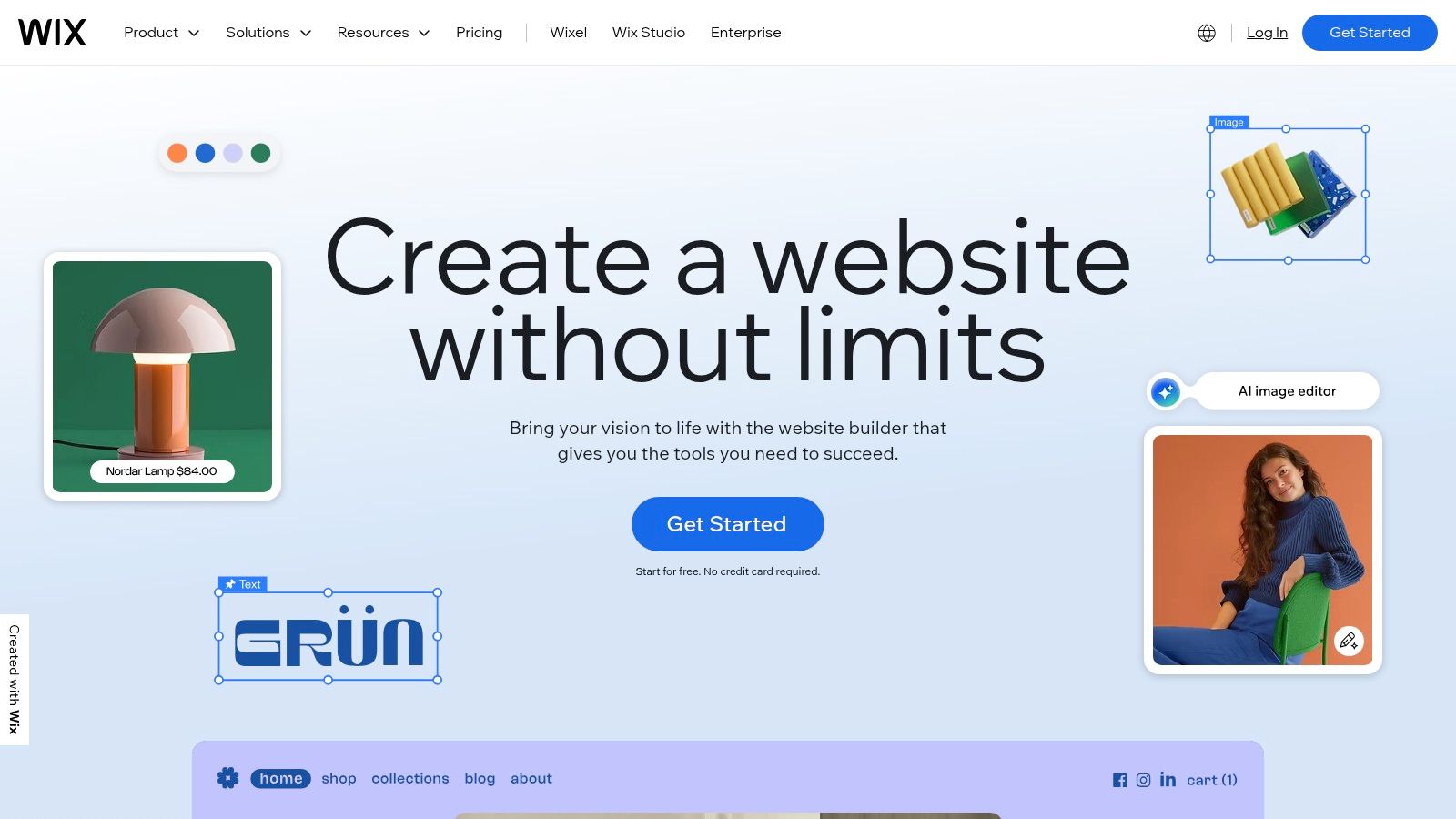
For absolute beginners or time-crunched entrepreneurs, the Wix ADI (Artificial Design Intelligence) is a game-changer. By answering a few simple questions about your business, the ADI generates a complete, functional website with relevant text and images. For those with a clear creative vision, the classic Wix Editor provides a true drag-and-drop interface, allowing you to place any element anywhere on the page-a level of freedom few competitors can match.
Key Features and Considerations
Wix isn't just a design tool; it’s a comprehensive business platform. The integrated App Market features over 500 applications for everything from advanced e-commerce and online bookings (Wix Bookings) to marketing automation (Ascend by Wix) and community forums. This makes it an excellent website builder for small business owners looking to scale operations without migrating platforms.
However, this flexibility comes with a crucial limitation: once your site is published, you cannot switch to a different template without starting over. This makes initial template selection a critical decision.
- Best For: Service-based businesses, restaurants, artists, and e-commerce startups needing a visually stunning and highly functional site without coding.
- Pricing: Offers a limited free plan. Paid plans start at around $17/month for personal use, with business and e-commerce plans ranging from $27 to $159/month.
- Website: https://www.wix.com/
2. Squarespace: The Leader in Design-Forward Simplicity
Squarespace has carved out its niche as the premier website builder for small business owners who prioritize aesthetics and brand cohesion above all else. It's the go-to platform for creatives, service professionals, and boutique retailers who want a stunning, professional website without the steep learning curve of more complex editors. Its strength lies in its curated, all-in-one approach, providing a polished user experience from the backend to the live site.
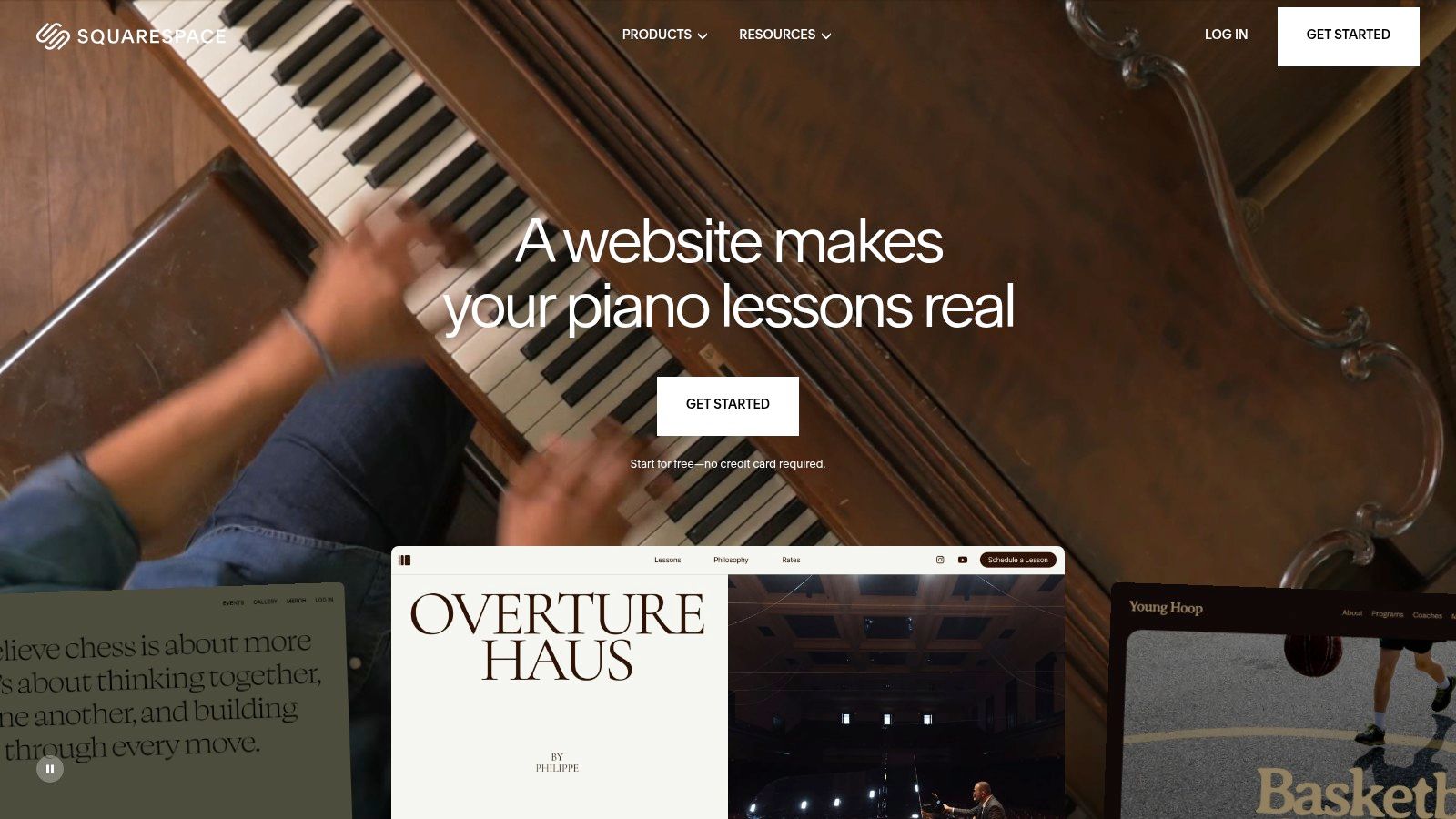
Unlike the "blank canvas" approach of some competitors, Squarespace uses a structured, section-based editor. This ensures that every element remains responsive and design-consistent, preventing the common visual mistakes that can plague DIY websites. While this means less granular control over element placement, it guarantees a high-quality, mobile-friendly result, making it a reliable choice for entrepreneurs who value professional polish over ultimate customization.
Key Features and Considerations
Squarespace's all-in-one model means hosting, SSL security, and domains are handled within one ecosystem, simplifying the technical side of managing a website. Its integrated toolset is robust, featuring powerful blogging capabilities, built-in SEO tools, and solid e-commerce features suitable for most small product catalogs. You can sell unlimited products, including digital items, memberships, and courses.
The platform's primary drawback is its cost structure. Core features are included, but powerful add-ons like Squarespace Scheduling for appointments or Email Campaigns for marketing are separate subscriptions. This can significantly increase the total monthly cost as your business needs grow, a crucial factor to consider when budgeting.
- Best For: Photographers, consultants, bloggers, and boutique e-commerce stores that need an elegant, portfolio-centric site with integrated business tools.
- Pricing: Offers a 14-day free trial. Paid plans start at $16/month, with business and commerce plans ranging from $23 to $65/month when billed annually.
- Website: https://www.squarespace.com/
3. Shopify: The Gold Standard for E-commerce
Shopify has solidified its position as the premier platform for businesses where selling products is the primary objective. It’s not just a website builder with e-commerce features; it's a comprehensive commerce operating system designed from the ground up to manage, market, and grow a retail business. This e-commerce-first approach is its defining strength and what sets it apart from more general-purpose builders.

From a drag-and-drop store builder to its powerful integrated payment processor (Shopify Payments) and Point of Sale (POS) system for physical retail, every tool is optimized for conversion. The platform handles the technical complexities of security and performance, allowing entrepreneurs to focus entirely on their products and customers. To deeply understand its popularity, exploring the key Shopify advantages reveals why it's often seen as the uncontested leader for e-commerce.
Key Features and Considerations
Shopify’s true power lies in its scalability and vast ecosystem. The App Store, with over 8,000 integrations, allows businesses to add virtually any functionality imaginable, from advanced marketing automation and loyalty programs to sophisticated inventory management and dropshipping tools. Features like abandoned cart recovery, multi-channel selling on social media, and discounted shipping rates are built-in to drive sales from day one. Learn more about how Shopify works as an e-commerce CMS.
However, its specialization is also a consideration. While excellent for selling, its blogging and content creation tools are less robust than platforms like WordPress. Also, transaction fees apply if you use a third-party payment gateway instead of Shopify Payments.
- Best For: Any business primarily focused on selling products online or in-person, from startups and dropshippers to large-scale retail brands.
- Pricing: Plans start with a free trial. Basic plans are around $29/month, with advanced plans scaling up to enterprise-level Shopify Plus.
- Website: https://www.shopify.com/
4. WordPress.com: The Content King with Scalable Power
WordPress.com offers a streamlined entry into the world's most popular content management system, removing the technical hurdles of self-hosting. It’s designed for businesses that prioritize content-rich websites, such as blogs, news portals, and portfolios, while still offering a clear growth path toward robust e-commerce and plugin-driven functionality. This managed approach makes it an ideal website builder for small business owners who want the power of WordPress without the server maintenance.
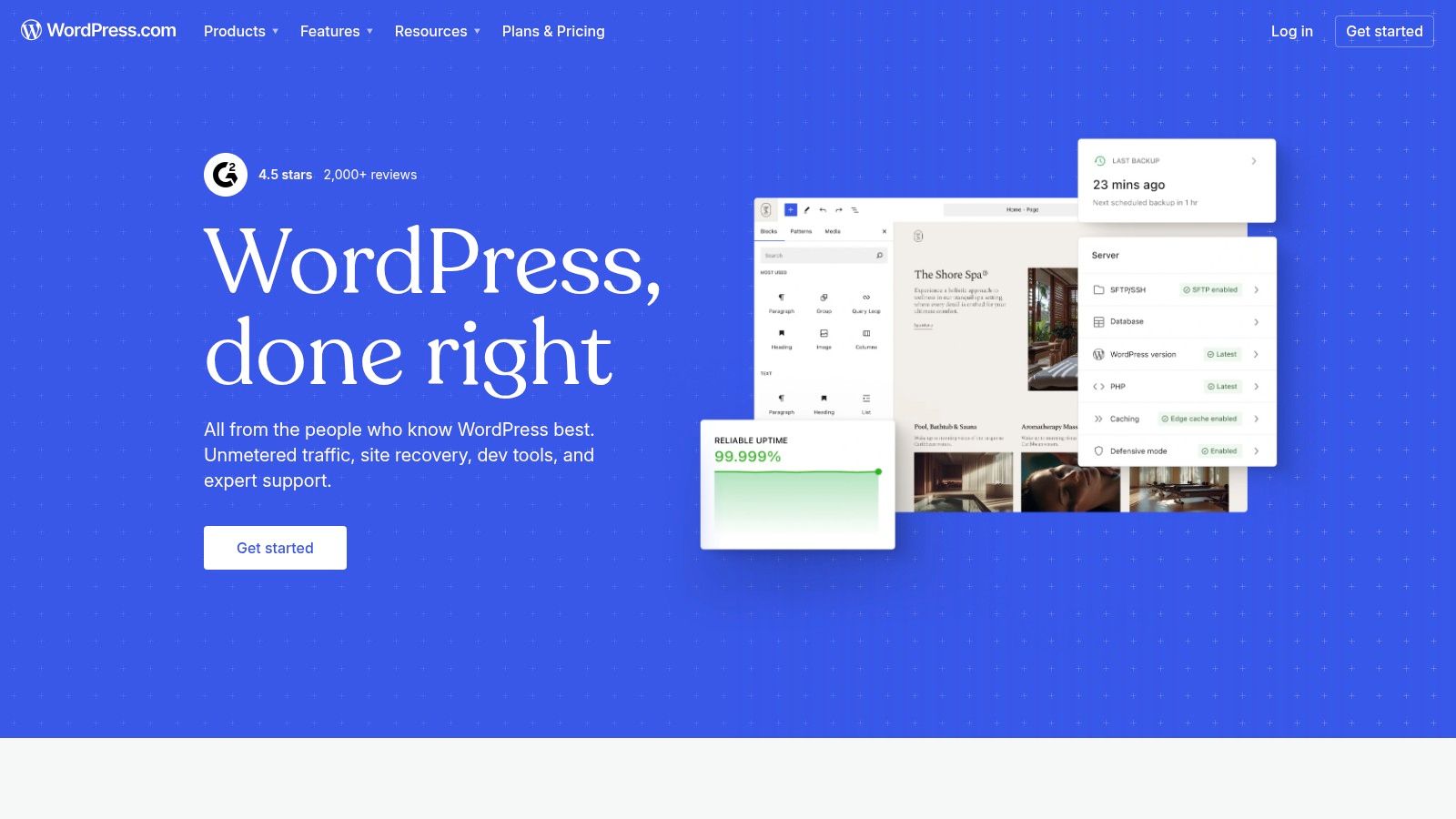
The platform leverages the intuitive block editor (Gutenberg), allowing users to build pages and posts with modular content blocks, patterns, and a wide selection of professional themes. While lower-tier plans are more restrictive, the higher-tier Business and Commerce plans unlock the true potential of WordPress, granting access to the vast ecosystem of third-party plugins (like WooCommerce) and themes that the platform is famous for. This scalability is its key advantage over more rigid, all-in-one builders.
Key Features and Considerations
WordPress.com bundles hosting, security, and a custom domain into its paid plans, simplifying the setup process considerably. The Commerce plan, in particular, is a powerful e-commerce solution that includes premium WooCommerce extensions for subscriptions, bookings, and more, right out of the box. Unlike its self-hosted counterpart, WordPress.org, all paid plans here come with dedicated 24/7 support.
The main consideration is the pricing structure; key features like plugin installation and advanced SEO tools are gated behind the more expensive plans. This means businesses must commit to a higher tier to access the full flexibility that makes WordPress so appealing. For a deeper analysis of its capabilities, you can learn more about the WordPress.com hosted platform.
- Best For: Content-heavy businesses, bloggers, publishers, and e-commerce stores that anticipate needing the extensive customization offered by the WordPress plugin ecosystem.
- Pricing: Offers a free, limited plan. Paid plans start at $4/month (billed annually) for personal use, with Business plans at $25/month and Commerce plans at $45/month.
- Website: https://wordpress.com/
5. Webflow: Professional-Grade Design for Ambitious Businesses
Webflow occupies a unique space between traditional website builders and full-stack development, offering unparalleled visual control over HTML, CSS, and JavaScript without writing code. It is the ideal platform for design-focused businesses, agencies, and entrepreneurs who refuse to be limited by a template's constraints. This power positions Webflow as a top-tier website builder for small business owners with a clear, custom design vision.
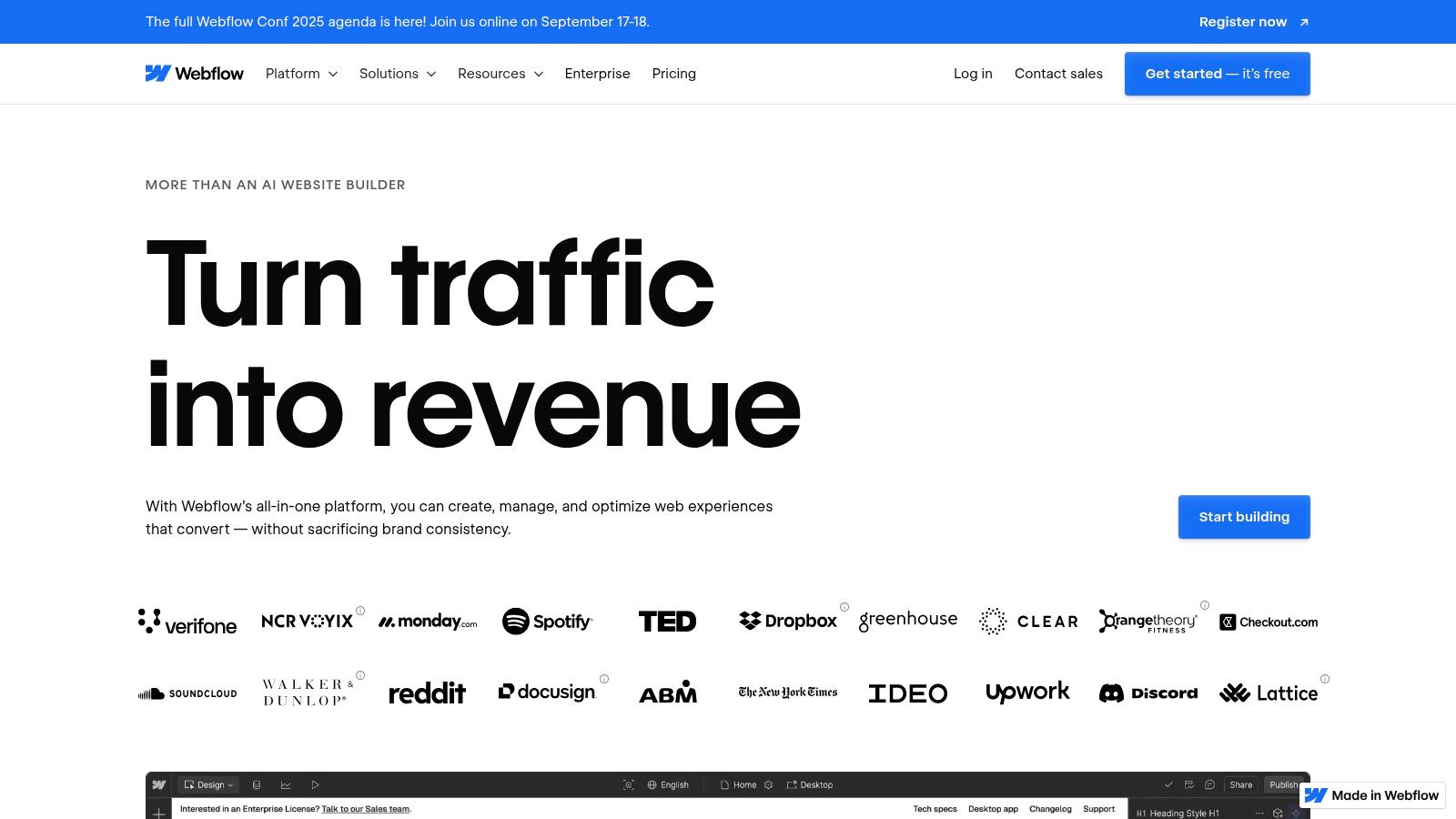
Unlike drag-and-drop editors that operate within a grid, Webflow provides a visual canvas that directly manipulates the underlying code, offering pixel-precise control. This allows for truly bespoke layouts, complex animations, and interactive elements that are difficult to achieve on other platforms. The platform is built around a "no-code" philosophy but produces clean, semantic code that performs exceptionally well.
Key Features and Considerations
Webflow’s power extends beyond design into its robust Content Management System (CMS). Using "Collections," you can build structured content types like blog posts, team members, or case studies, which can be dynamically pulled into any page design. This makes managing and scaling content-heavy sites incredibly efficient. You can explore more about this functionality and other no-code CMS solutions here.
However, this professional-grade power comes with a steeper learning curve than most builders. Those unfamiliar with basic web design principles like the box model may find it initially challenging. Webflow University provides extensive free tutorials, but new users should budget time for learning.
- Best For: Design agencies, creative professionals, and businesses requiring a completely custom, high-performance website with a powerful CMS.
- Pricing: Offers a free plan for learning. Paid site plans start at $14/month (billed annually), with CMS and Business plans ranging from $23 to $39/month. E-commerce plans are separate.
- Website: https://webflow.com/
6. GoDaddy Website Builder: The All-in-One for Service Providers
GoDaddy positions its Website Builder as the fastest way for a small business to establish a complete online presence, bundling domains, email, and marketing tools into a single, streamlined package. Its primary strength lies in its simplicity and speed, making it an excellent choice for business owners who prioritize getting online quickly over intricate design customization. The platform is less about granular creative control and more about providing a comprehensive, functional toolkit.
The setup process is guided and leverages AI to generate a foundational site based on your industry and business name. This approach removes much of the initial friction, allowing users to move directly to populating their site with content. While the design flexibility is more limited than competitors like Wix, the trade-off is a highly intuitive and uncluttered interface that prevents users from getting overwhelmed.
Key Features and Considerations
GoDaddy's true value emerges from its integrated ecosystem. The builder includes built-in SEO tools, email marketing campaign functionality, social media post creation, and a unified inbox for managing customer communications. Higher-tier plans add robust appointment scheduling and payment processing, making it a powerful website builder for small business owners in service-based industries. The Commerce plan even extends to marketplace selling and point-of-sale (POS) integration.
A significant consideration is the pricing structure. GoDaddy is known for attractive introductory offers, but renewal rates are substantially higher. This makes it crucial for business owners to factor in the long-term cost, not just the initial discounted price.
- Best For: Service-based businesses, local contractors, and solopreneurs who need an all-in-one solution with domains, email, and marketing tools bundled together.
- Pricing: Offers a free plan. Paid plans start at around $12.99/month, with e-commerce plans starting at approximately $20.99/month (note these often reflect promotional first-year pricing).
- Website: https://www.godaddy.com/website-builder
7. Square Online (from Square): The Go-To for Integrated Commerce
Square Online carves out a unique and powerful niche by seamlessly merging online and offline commerce. It's designed from the ground up for businesses already using or planning to use Square’s ecosystem of payment and point-of-sale (POS) tools, making it the definitive choice for local retailers, restaurants, and service providers looking to expand their digital footprint without operational headaches. This deep integration is its core strength.
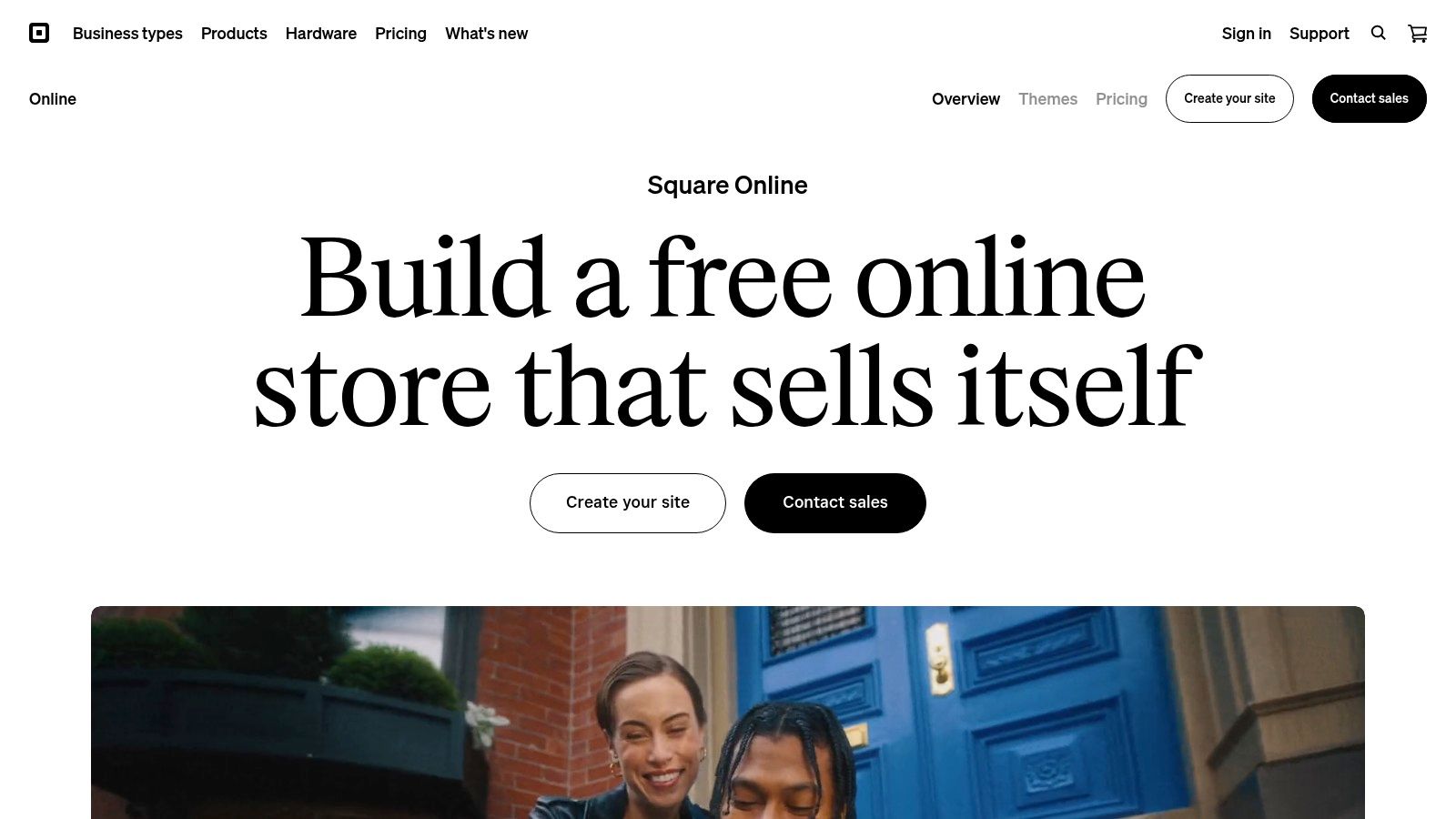
Unlike general-purpose builders, Square Online prioritizes transactional efficiency over limitless design freedom. The platform automatically syncs your inventory, sales data, and customer information between your physical store and your website. This means a product sold in-person is instantly updated online, preventing overselling and simplifying management. The builder is template-based, ensuring a quick and mobile-responsive setup focused on driving sales and bookings.
Key Features and Considerations
The platform is more than just an e-commerce front; it's a central hub for business operations. It natively supports online ordering for pickup or delivery, appointment scheduling, and social selling through integrations with Instagram and Facebook. As a website builder for small business owners focused on unified commerce, it eliminates the need for clunky third-party connectors for core payment and inventory functions.
However, this tight integration comes with a trade-off. The design customization is more limited compared to platforms like Wix, confining users to predefined layouts. While you can start for free, transaction fees are a constant, and unlocking advanced e-commerce features like abandoned cart recovery requires upgrading to a paid monthly plan.
- Best For: Existing Square users, restaurants, cafes, brick-and-mortar retailers, and service businesses needing a unified system for online and in-person sales.
- Pricing: Offers a robust free plan (transaction fees apply). Paid plans start at around $29/month to unlock advanced features and remove Square branding.
- Website: https://squareup.com/online-store
8. BigCommerce: The E-commerce Powerhouse for Scalability
BigCommerce positions itself as a robust, SaaS e-commerce platform designed for businesses with serious growth ambitions. It strikes a balance between the simplicity of an all-in-one builder and the power of enterprise-grade solutions, making it a prime choice for small businesses planning to scale into larger operations. Its main differentiator is its rich set of native features, which reduces reliance on costly third-party apps for core functionalities.
Unlike many competitors that charge extra transaction fees on top of payment processor rates, BigCommerce charges 0% on all its plans. This transparent approach is highly appealing for merchants. The platform is built to handle complex catalogs and offers powerful native SEO tools and multi-channel selling capabilities, allowing you to manage sales on marketplaces like Amazon, eBay, and social media directly from your dashboard.
Key Features and Considerations
BigCommerce is a comprehensive website builder for small business owners focused purely on selling products. Its plans are structured around your annual sales volume, meaning the platform grows with your revenue. While this provides a clear scaling path, it also means your plan will automatically upgrade once you cross a certain revenue threshold, which can be an unexpected cost if not properly anticipated. The platform's extensive feature set also presents a steeper learning curve compared to simpler, drag-and-drop-focused builders.
The inclusion of 24/7 live agent support across all plans is a significant advantage, providing a safety net for merchants who need immediate technical assistance. This focus on both B2C and B2B capabilities makes it a versatile choice for a wide range of e-commerce ventures.
- Best For: Ambitious e-commerce startups and established online retailers who need advanced inventory management, multi-channel sales, and B2B features without paying extra transaction fees.
- Pricing: Plans are based on annual sales volume. Standard starts at around $39/month, Plus at $105/month, and Pro at $399/month. A 15-day free trial is available.
- Website: https://www.bigcommerce.com/essentials/pricing/
9. Hostinger Website Builder (formerly Zyro): The Ultimate Value Proposition
Hostinger Website Builder, which absorbed the Zyro platform, has carved out a powerful niche by offering an exceptionally low-cost, all-in-one package. It targets budget-conscious small business owners who need a reliable, fast-loading website without the complexity or higher monthly fees of more established competitors. Its core strength lies in bundling web hosting, a free domain, and a user-friendly builder into one single, affordable subscription, dramatically simplifying the startup process.
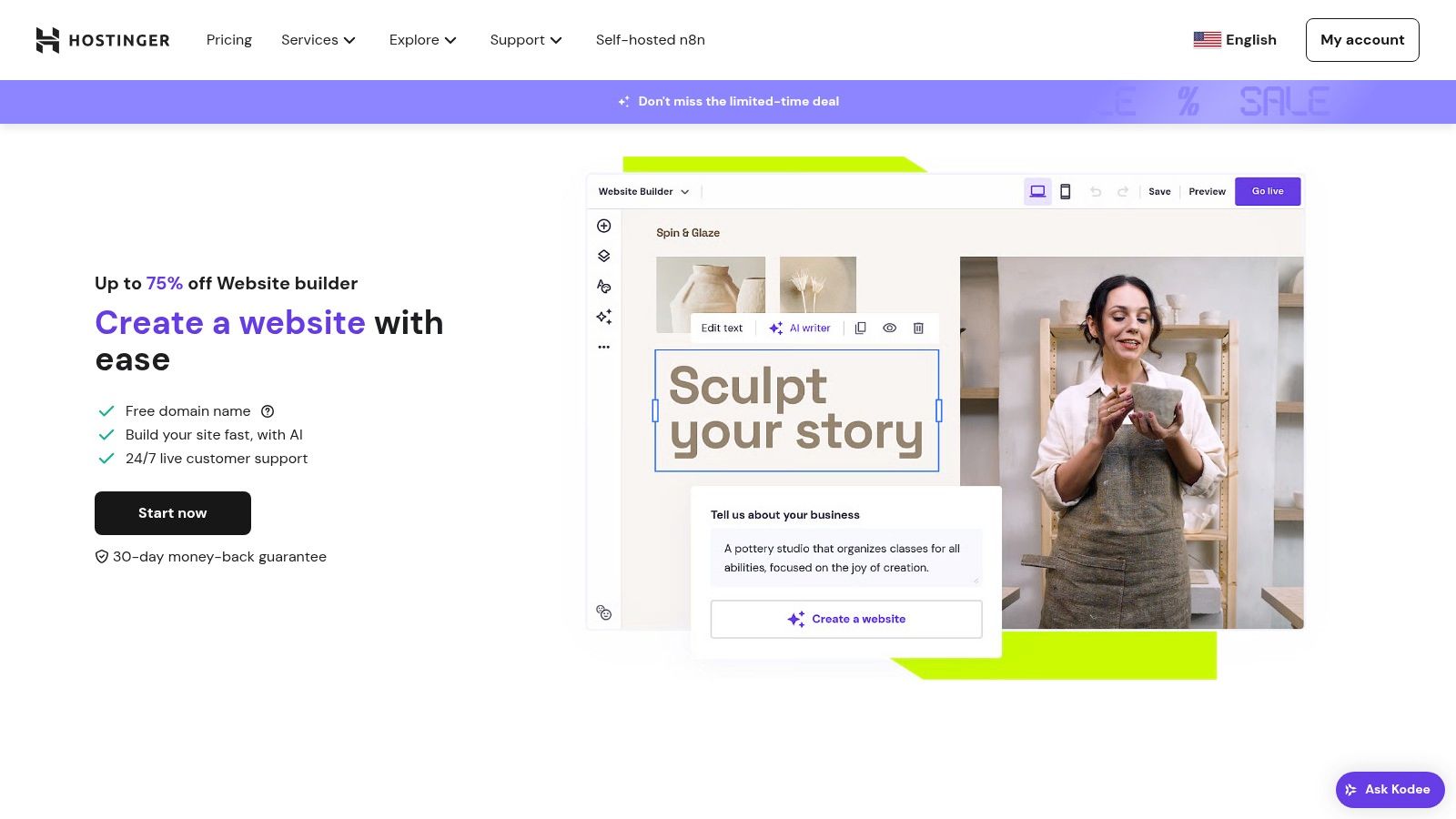
The platform uses a straightforward drag-and-drop editor that is easy to master, making it a great entry point for those with no technical background. What sets it apart at its price point is the inclusion of surprisingly useful AI tools. The AI Writer can help generate site copy to overcome writer's block, while the AI Heatmap helps you understand where visitors are clicking, offering insights usually reserved for more expensive analytics software.
Key Features and Considerations
Hostinger’s e-commerce functionality is robust for its cost, supporting numerous payment gateways without charging additional transaction fees on top of the processor's, a significant advantage for new online stores. The inclusion of 24/7 live chat support provides a crucial safety net for entrepreneurs who may need immediate assistance.
The primary trade-off is a more limited feature set and a smaller app marketplace compared to platforms like Wix or Shopify. While it covers all the essential business needs, businesses requiring highly specialized integrations may find it restrictive. It's an excellent website builder for small business owners prioritizing speed, simplicity, and an unbeatable price-to-feature ratio.
- Best For: Freelancers, startups, and small businesses on a tight budget needing a professional, all-inclusive web presence with solid e-commerce basics.
- Pricing: No free plan, but offers a 30-day money-back guarantee. Plans are extremely competitive, often starting as low as $2.99/month with introductory offers that include a free domain.
- Website: https://www.hostinger.com/website-builder
10. Duda: The Professional's Choice for Client-Focused Builds
Duda carves out a unique niche by targeting web professionals, freelancers, and agencies who build websites for small businesses. Instead of focusing solely on the end-user DIY experience, Duda provides a powerful, collaborative platform designed for efficiency, scalability, and client management. Its core strength lies in its white-label capabilities and robust toolset that streamline the process of creating and managing multiple client sites.
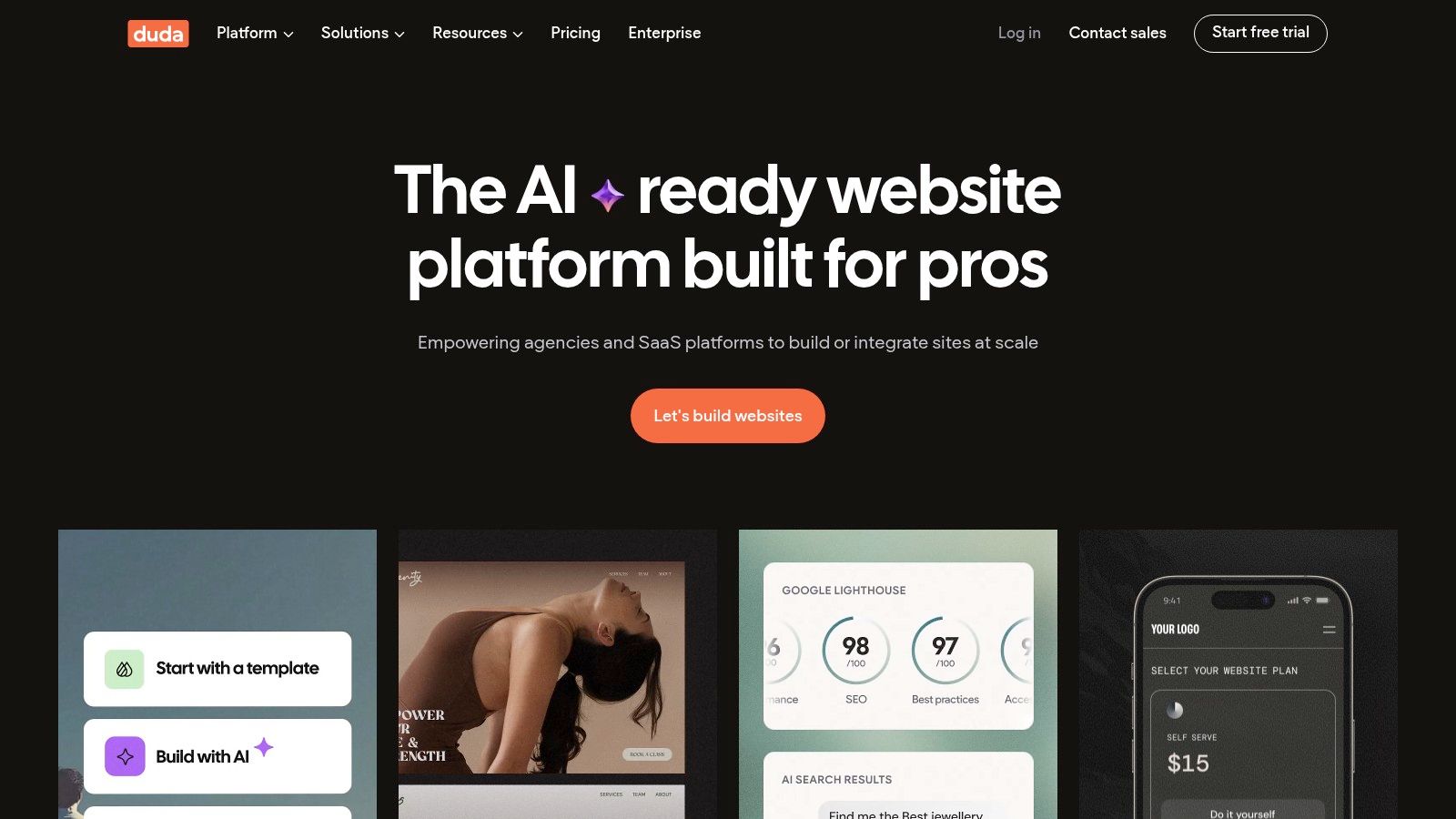
This platform is engineered for performance, boasting exceptionally fast load times and guaranteed uptime thanks to its AWS hosting infrastructure. For agencies, features like granular user permissions, client billing, and content collection tools are invaluable. This allows a freelancer or agency to give clients limited access to update specific parts of their site without risking the overall design, a common pain point with other builders.
Key Features and Considerations
Duda is more than just a site editor; it's a complete client fulfillment system. The platform includes a custom widget builder, access to the site's code for deeper customization, and powerful team collaboration features. This makes it an ideal website builder for small business service providers who need reliability and a professional workflow to manage their client roster effectively.
The primary consideration is its pricing model, which is structured differently from consumer-focused builders. While powerful, the cost per site can be higher for a single business owner compared to other options. It's less suited for a solo entrepreneur building their first site and more aligned with professionals who value its client-centric toolset.
- Best For: Web design agencies, freelancers, and marketing firms that manage a portfolio of small business clients and require white-labeling and collaboration tools.
- Pricing: No free plan. Plans designed for professionals start at around $25/month for one site, with agency plans offering multiple sites and advanced features from $52/month.
- Website: https://www.duda.co/
11. IONOS MyWebsite (US): The All-Inclusive Value Package
IONOS establishes its place in the market by bundling essential business services into an incredibly affordable initial package. It’s designed for the pragmatic small business owner who needs a professional website, a custom domain, and a matching email address without the complexity or cost of sourcing them separately. The platform prioritizes getting a functional, complete digital presence online quickly and efficiently.
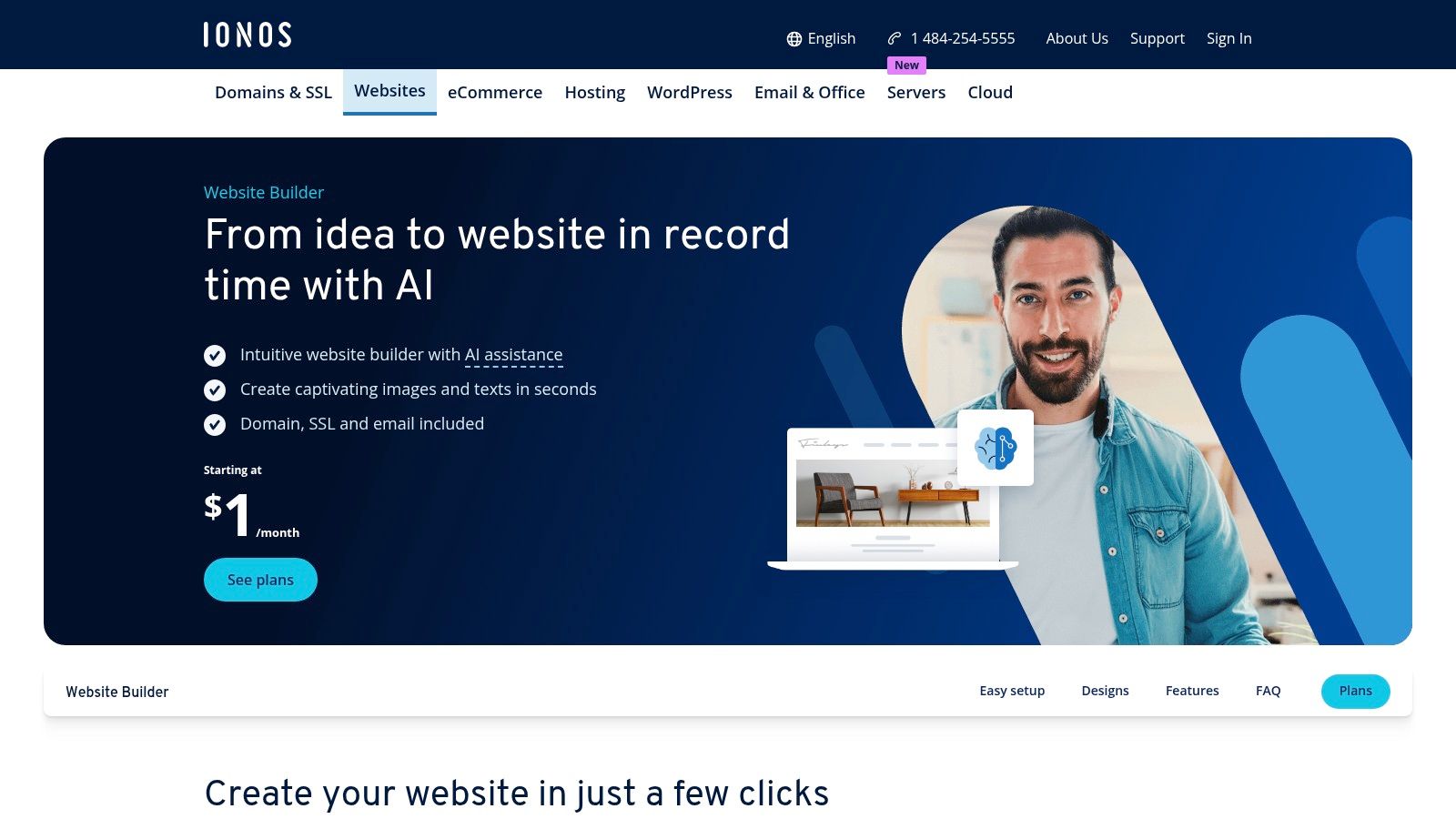
The core offering is built around convenience and support. IONOS provides an AI-powered website generator to create a starting point, along with AI text and SEO assistants to help populate and optimize content. The inclusion of a dedicated personal consultant via phone, chat, or email is a significant differentiator, offering a level of personalized support that is rare at this price point. This makes it an appealing website builder for small business owners who value direct, accessible guidance.
Key Features and Considerations
IONOS bundles a free domain and professional email for the first year (with annual plans), which is a major value-add for new ventures establishing their brand identity. The platform also integrates practical tools like online booking and social media selling capabilities, catering directly to service providers and local businesses.
However, this focus on value and bundled services comes with a trade-off. The design flexibility and template quality are not as sophisticated as more design-centric builders like Wix or Squarespace. Furthermore, while the introductory pricing is highly competitive, renewal rates are significantly higher, which is an important long-term budget consideration.
- Best For: New local service businesses, consultants, and sole proprietors who need a comprehensive, low-cost startup package with strong customer support.
- Pricing: Features extremely low introductory offers, often starting around $1/month for the first year. Standard plans range from about $12 to $60/month upon renewal.
- Website: https://www.ionos.com/websites/website-builder
12. Strikingly: The Master of Simplicity and Single-Page Sites
Strikingly carves out its niche by focusing on simplicity and speed, positioning itself as the ideal website builder for small business owners who need to get online fast. Its core strength lies in creating elegant, mobile-responsive one-page websites, making it perfect for landing pages, personal portfolios, event promotions, or straightforward service-based businesses. The platform is designed to eliminate complexity, allowing users to build a complete site in under an hour.
Unlike builders that offer overwhelming customization, Strikingly provides a curated set of section-based templates. Users simply choose a design and add pre-built sections for services, contact forms, galleries, and more. This structured approach ensures a professional, well-organized layout without the risk of design missteps, which is a significant advantage for those with no design experience.
Key Features and Considerations
Despite its focus on simplicity, Strikingly includes surprisingly robust business tools. Even on lower-tier plans, users can access built-in e-commerce to sell a few products, create membership sites with protected content, and manage newsletters directly from the dashboard. The platform's commitment to lean efficiency makes it a powerful tool for validating a business idea or launching a targeted marketing campaign without a large upfront investment.
The primary limitation is its scalability. While perfect for simple sites, its rigid structure and smaller app ecosystem make it less suitable for complex e-commerce stores or businesses requiring deep third-party integrations.
- Best For: Freelancers, consultants, event organizers, and startups needing a polished, single-purpose website or landing page launched quickly.
- Pricing: A free plan is available with Strikingly branding. Paid plans start at $12/month, with Pro and VIP plans ranging from $20 to $59/month for advanced features.
- Website: https://www.strikingly.com/
Top 12 Website Builders for Small Business Comparison
| CMS | Core Features & Unique Selling Points ✨ | User Experience & Quality ★★★★ | Value & Pricing 💰 | Target Audience 👥 | Highlights 🏆 |
|---|---|---|---|---|---|
| Wix | Drag-drop editor, extensive templates, ecommerce, vertical apps | Beginner-friendly, fast launch, 24/7 support | Moderate with potential add-on costs | Small businesses, beginners | Broad app marketplace, quick scalability |
| Squarespace | Elegant templates, built-in SEO & marketing, unlimited products | Polished design, cohesive UX | Mid-tier, free 14-day trial | Creatives, boutiques, service pros | Design-forward, all-in-one hosting |
| Shopify | Ecommerce-first, 8,000+ apps, POS & payments, AI tools | Robust, reliable ecommerce features | Mid to high with app fees | Online retailers, growing ecommerce | Leading ecommerce features & multichannel |
| WordPress.com (hosted) | Block editor, SEO tools, plugins, WooCommerce extensions | Strong blogging & SEO, managed hosting | Variable, higher tiers unlock features | Content-heavy sites, stores | Extensive plugin ecosystem with hosting |
| Webflow | Pixel-perfect design, CMS, ecommerce, CDN hosting | Professional quality, steep learning curve | Mid to high, usage-based | Agencies, designers, SMBs | Exceptional design flexibility |
| GoDaddy Website Builder | AI setup, SEO, email, marketing, ecommerce option | Simple setup, 24/7 support | Affordable entry, higher renewals | Fast launch small businesses | AI-assisted build, bundled business tools |
| Square Online | Free start, Square POS integration, social selling | Easy sync of online & offline sales | Free entry, transaction fees apply | Local retailers, restaurants | Seamless Square ecosystem integration |
| BigCommerce | Multi-channel sales, no extra payment fees, SEO tools | Feature-rich, 24/7 support | Revenue-based plans, auto plan upgrades | SMBs scaling to enterprise | Enterprise-grade ecommerce with transparent fees |
| Hostinger Website Builder | Drag-drop builder, AI writer, hosting + free domain | Affordable, fast loading, 24/7 chat support | Low-cost entry, bundled services | Budget-conscious small businesses | All-in-one bundle with AI tools |
| Duda | White-labeling, client portals, code export, AWS hosting | Agency-focused, reliable & secure | Per-site pricing can add up | Agencies, freelancers | Best for multi-client workflows |
| IONOS MyWebsite (US) | AI site generator, domain & email bundled, booking tool | Competitive pricing, personal consultant support | Affordable intro, higher renewal rates | Local service businesses | Strong value with bundled domain/email |
| Strikingly | One-page focus, fast setup, ecommerce & memberships | Extremely easy, mobile responsive | Low cost Pro, VIP removes fees | Simple sites, events, lean service biz | Fast launch, simple UX |
Making the Final Decision: Which Builder is Right for Your Business?
Navigating the crowded landscape of website builders can feel overwhelming, but the extensive analysis in this guide demonstrates a crucial point: the "best" platform is entirely subjective. The ideal website builder for small business success depends not on a universal ranking, but on a precise alignment with your unique operational needs, technical comfort level, and long-term growth ambitions. This decision is less about picking a winner and more about conducting a strategic self-assessment.
Our deep dive into platforms from the all-in-one simplicity of Wix to the design-centric power of Webflow reveals a clear spectrum of solutions. Your final choice hinges on answering a few critical questions about your business priorities.
Distilling Your Core Requirements
To move from analysis to action, you must translate your business goals into platform features. This requires a focused evaluation of what truly matters for your venture's success, moving beyond flashy templates to the functional core of each builder.
Consider these pivotal decision-making frameworks:
For Pure E-commerce Ambition: If your primary goal is to sell products online, your choice narrows significantly. Shopify stands out as the gold standard for dedicated, scalable online stores with its robust inventory management, extensive app ecosystem, and integrated payment processing. For businesses already embedded in the Square ecosystem, Square Online offers an incredibly seamless transition from in-person to online sales. For those anticipating complex product catalogs and enterprise-level growth, BigCommerce provides the necessary horsepower without transaction fees. However, if you're weighing the pros and cons of a hosted platform versus a more customizable, self-hosted solution, a detailed comparison between Shopify or WooCommerce can be instrumental in making the right choice.
For Service-Based Businesses and Portfolios: If your website's main function is to generate leads, showcase a portfolio, or book appointments, your needs shift towards design, content management, and client interaction tools. Squarespace remains a top contender for its visually stunning templates and intuitive interface, making it perfect for creatives and consultants. Duda excels for agencies and freelancers managing multiple client sites, offering powerful collaboration and white-labeling features. For rapid deployment, GoDaddy Website Builder and Strikingly provide the fastest path from concept to a live, professional-looking site.
For Content-Driven Businesses and Bloggers: If your strategy revolves around content marketing, SEO, and building a community, your focus should be on blogging tools, SEO controls, and scalability. WordPress.com offers a direct gateway into the world's most popular content management system, providing powerful blogging features and a clear growth path. Wix has also made significant strides with its SEO capabilities and blogging platform, offering a more visually-driven, user-friendly alternative.
Final Implementation Considerations
Once you've shortlisted your top two or three options, the final step is practical testing. Nearly every website builder for small business reviewed here offers a free trial or a limited free plan. Use this opportunity to not just browse templates, but to actively build a test page.
- Test the Editor: Can you easily add, move, and customize elements? Is the interface intuitive or frustrating?
- Explore Key Features: If you need a booking system, test it. If you plan to sell products, create a dummy product listing.
- Check Mobile Responsiveness: Use the platform's preview tool to see how your test site looks and functions on different devices.
This hands-on experience will reveal nuances that no review can fully capture. Ultimately, selecting a website builder is a foundational business decision. By matching the platform’s strengths to your specific strategic goals, you are not just building a website; you are investing in a powerful engine for growth, marketing, and customer engagement that will serve your business for years to come.